
Researched and Written By Malcolm Wong (Co-founder of Interrassa Collective) │ Edits by Loong Dien Min and Allan Pang │ Design by Dennis Ong
Evolutionary Theory may be advanced by two prominent European thinkers: Alfred Russel Wallace and Charles Darwin, but the research that goes into it was essentially a transnational effort, one that involved multiple collaborations with the locals of Sarawak.
For Wallace, his version of evolutionary theory was made possible by a dependency on local interlocutors in Southeast Asia. In particular, the lands and multispecies inhabitants of Sarawak allowed a decisive turn in the modern history and philosophy of science.
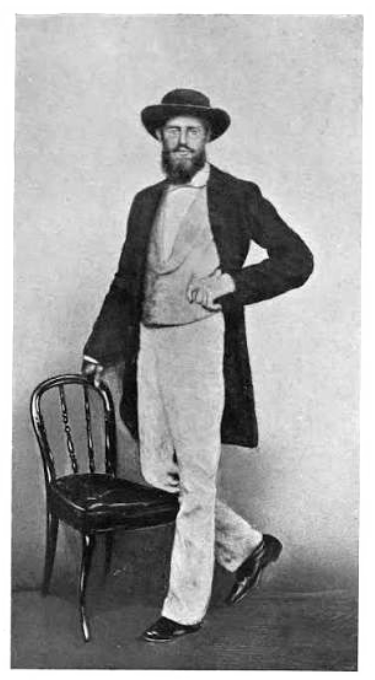
The first trace of Wallace’s evolutionary theory was found in his Sarawak Law paper in 1855 (also written in Sarawak), proposing that:
“Every species has come into existence coincident both in time and space with a pre–existing closely allied species.” [1]
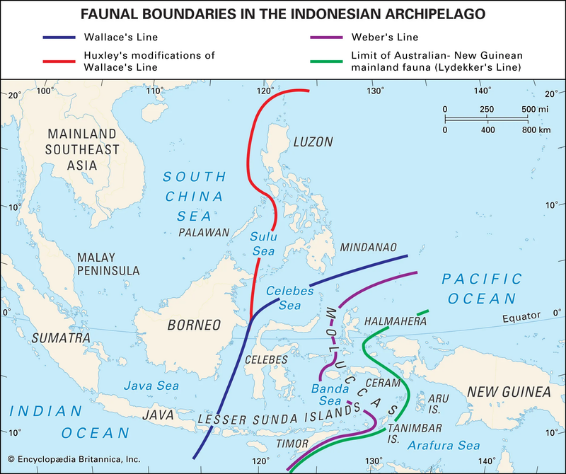
This meant that new species were made by divergences in geographical and geological differences over time, differentiating themselves from others like diverging branches.
[1] Wallace, A. R. 1855. On the law which has regulated the introduction of new species. Annals and Magazine of Natural History, 2nd.1
This proposition was remarkably similar to Darwin’s own theories of natural selection, having developed for 25 years yet still unpublished. Once Wallace informed Darwin of his theories on evolution, they decided to jointly present their theory to the Linnean Society of London in 1858. Following this, Wallace became pedestalized as a great thinker pioneering evolutionary science alongside Darwin.
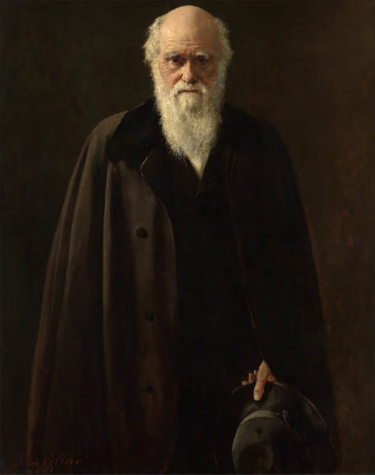
Source: Linnean Society
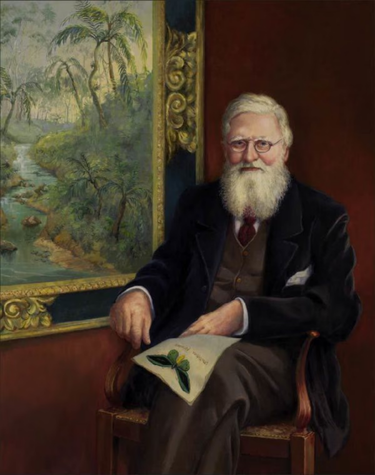
Source: Linnean Society
The Sarawak Locals Who Shaped Alfred Russell Wallace’s Evolutionary Science
Researched and Written By Malcolm Wong (Co-founder of Interrassa Collective) │ Edits by Loong Dien…
Everyday Crossings: Goay Lian Choo
Malaysia’s history was shaped by those who crossed borders and seas; to tell our history…
This is What Policy Feels Like: The Transnational Underpinnings of the NEP
By William Tham and Brendan Yeo Prime Minister Tun Abdul Razak giving a briefing on…
Malaysian Chinese Cultural Society, ‘Memorandum on National Culture’
By Allan Pang Malaysian Chinese Cultural Society, ‘Memorandum on National Culture’, 1983馬來西亞華人文化協會,國家文化備忘錄,1983For illustration purposes only….
Alamat Langkapuri: The World’s First Jawi Newspaper
By Front cover of Alamat Langkapuri Portrait of Baba Ounos Saladin, the Publisher and Editor…
World War II Radio Operator
Sharon Wah When memorial is erasure: The story of a radio operator, and the constricting…
But the underbelly of the Sarawak Law was the contribution of innumerable, anonymized locals during his fieldwork. The work/analysis leading to the Sarawak Law paper was made possible only by a logistics of scale: Altogether he gathered 125,660 natural history specimens across 14,000 miles of travel in Southeast Asia, as noted in his preface of The Malay Archipelago, a book about his travel narrative providing us a source on the assistance of locals.
A history of science scholar: John van Wyhe estimated in 2018 that around 1,200 people aided Wallace in his expeditions in maritime Southeast Asia by helping him to navigate around the landscapes of his interest, as well as explaining animal behaviours and their locations.[2]
[2] van Wyhe, J. (2018). Wallace’s Help: The Many People Who Aided A. R. Wallace in the Malay Archipelago. Journal of the Malaysian Branch of the Royal Asiatic Society 91(1), 41-68. https://dx.doi.org/10.1353/ras.2018.0003.
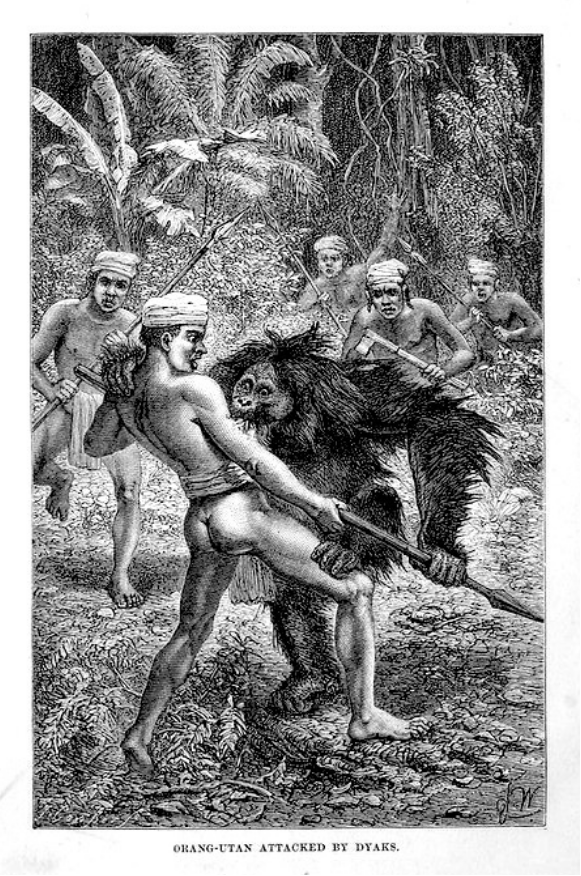
One notable example is his early journey in Simunjan, a mining hub east of Kuching, the capital of the Raj of Sarawak. At the time, Sarawak was under the rule of James Brooke, the White Rajah. Wallace’s inaugural journey was facilitated by 20 to 50 Chinese and Dayak (Iban) workers employed to clear the forest for a railroad. His travels were protected and sanctioned by James Brooke, but it was the Chinese and Dayak workers who built the house he lived in as a laboratory of sorts to collect natural history specimens over 9 months.
The majority of insect specimens were bought from these same workers, having laboured in forests and lands of Sarawak and being more familiar with the natural habitat of insect life. Wallace hence produced his initial collection of insect specimens by depending on the labour of Chinese and the Dayaks in the mines and the forest.

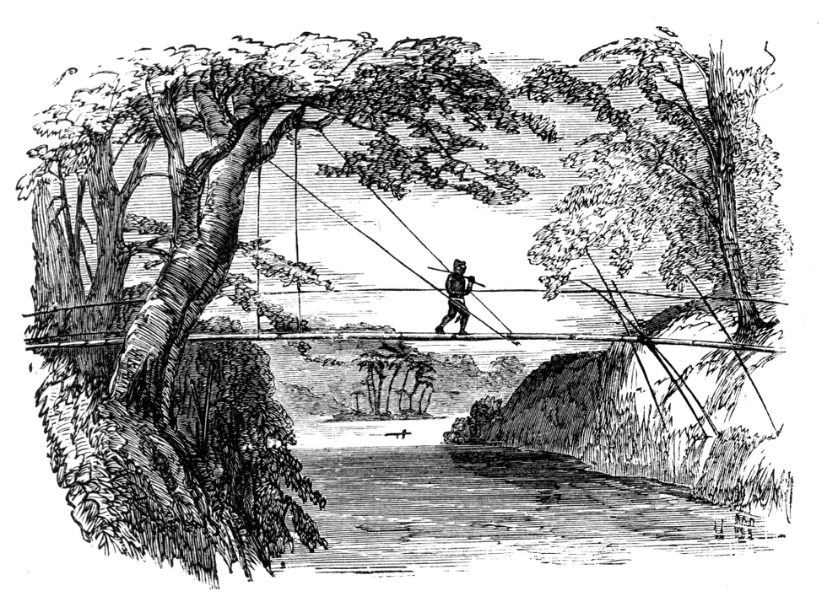
In another instance of his time in Sarawak when he decided to travel the Sadong River, he hired Bujon, a Malay ‘servant’, Bujon was proficient in the language of the Sadong Dayaks (grouped under the Hill Dyaks, which is an old term for the modern Bidayuh people).
Wallace learnt enough Malay to communicate with Bujon, who in turn, helped Wallace acquire a boat and accompanying men to navigate the Sadong River in a proceeding with a Dayak chief. Bujon disappeared from the narrative soon after, but he probably also mediated communications between Wallace and the Sadong Bidayuh people who enabled him to travel the river course.

Source: Veronica Chang-Schmid via Looking into the Past of Sarawak – Borneo on Facebook
The nature and humans of Sarawak were quintessential to Wallace’s scientific prominence. Locals should not be portrayed as mere marginalised figures left out of history with their contributions unacknowledged. Even if they are unaware of the purpose nor gradual significance behind his research expeditions, the locals aligned themselves with his interests for their own respective benefits, demonstrating agencies of their own.
This understanding allows us to consider local positions and agencies in historical contributions made through an overlapping of different knowledges and worldviews to be rediscovered first in the margins of historical materials and records.

To do this, we must make an effort to read the scientific archive against the grain. It is insufficient to only call thinkers like Wallace for their Eurocentrism; we must attempt to recover and reconstruct the roles and voices of the heterogenous, differentiated mass of locals, whose narrative absence or marginalisation enabled and legitimized the emergence of this very Eurocentrism that prioritise a singular, linear view of knowledge production. In this light, historians must recentre the varying, accumulative contributions of local subjects that made new frontiers of knowledge in natural history possible.
Source: Britannica
From 1 February to 1 March 2026, the artist Chang Yoong Chia and writer Teoh Ming Wah curated an exhibition titled Alfred Russel Wallace as Medium in Kuching, Sarawak. It seeks to reinterpret Wallace’s fieldwork in collecting natural specimens as being dependent on local interlocutors in Sarawak, as narrated in his seminal travel book The Malay Archipelago. This exhibition is part of a project to produce a graphic novel based on archival research of Wallace’s papers and field research of the landscapes he travelled in Sarawak.
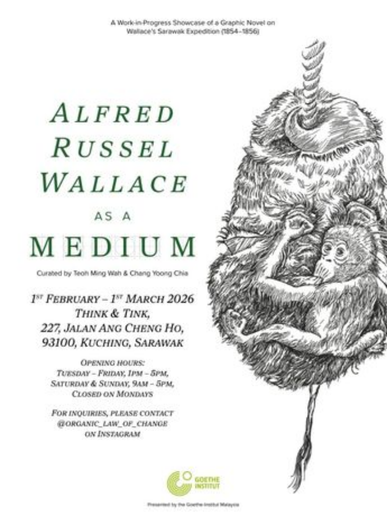
Image : Art Rabbit
This work-in-progress graphic novel aims to provide visual illustrations accompanying textual narrations of The Malay Archipelago. In turn, the visuals served as the subtext to outline a distant, third-person narration to uncover the process of Wallace’s fieldwork in turn informing his ideas on evolutionary theory. As Chang and Teoh have shown us through their exhibition, one can begin by visualised portrayals of these contributions as a reinterpretation of textual narratives. This imagination of local presences in such Eurocentric narratives is a starting point for the reinterpretation and rewriting of history.
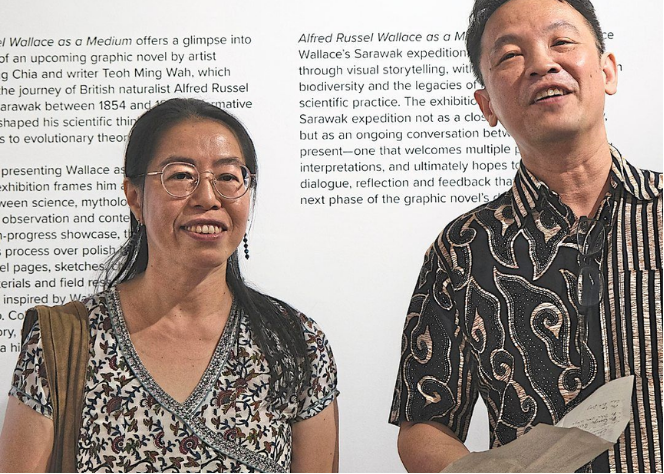
Image: Goethe-Institut Malaysia via The Star
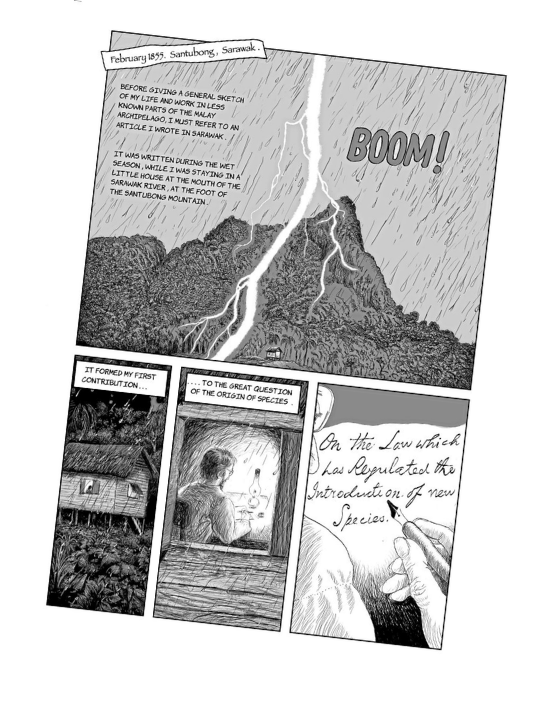
Image:
Chang Yoong Chia via The Star
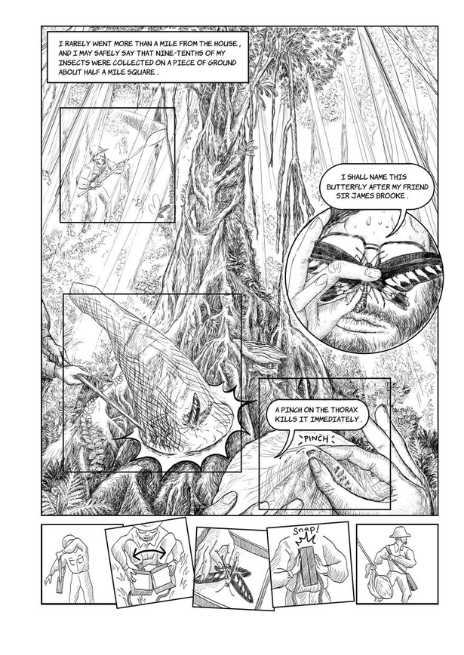
About the Researcher
Malcolm Wong is a Multidisciplinary Researcher and Programme Designer continuously inspired by Sarawak, Borneo. Having acquired experience in climate policy and sustainability advocacy, he co-founded Interrasa Collective to develop the cultural infrastructure of Southeast Asia by facilitating long-term creative environmentalist projects informed by latest innovations in the arts and sciences.