
By
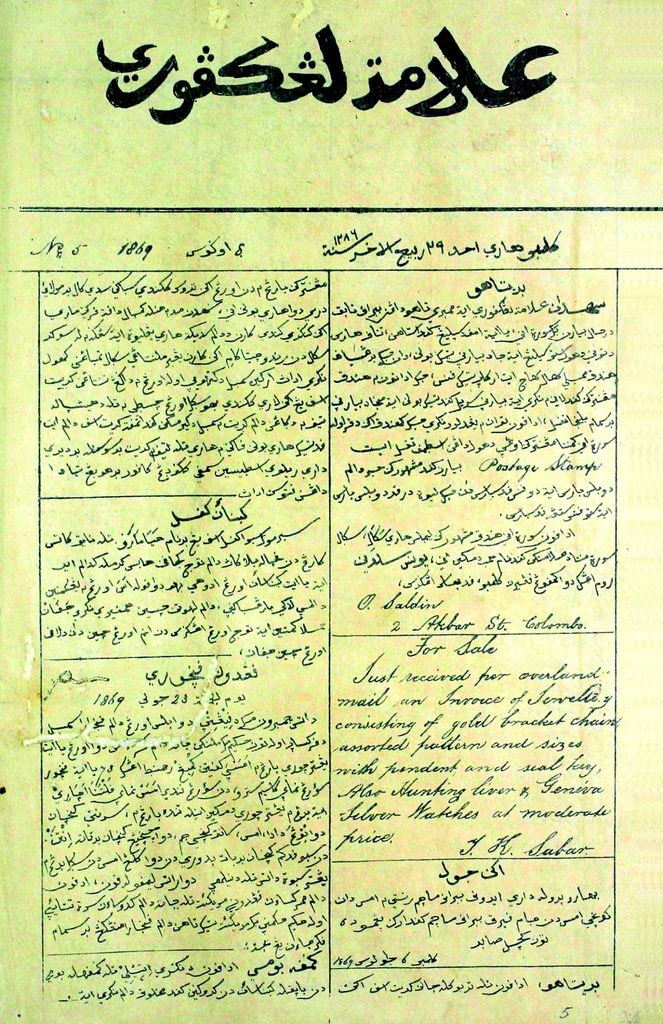
First published in June 1869, the first Bahasa Melayu and Jawi-written newspaper did not originate from the Malay archipelago but instead from Sri Lanka (then Ceylon).

Source: Fusion Wayang Kulit
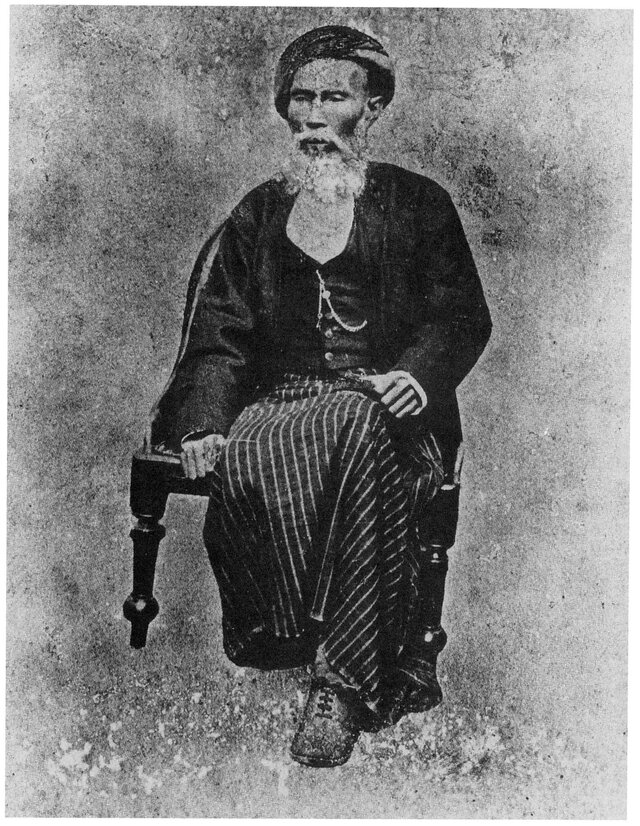
Alamat Langkapuri (علامت لڠكڤوري, News from Island of Lanka) was a lithographically printed newspaper based in Colombo, created by Baba Ounus Saladin, who was not only the creator but also the lithographer, editor, and publisher, and ran the Alamat Langkapuri Press. The newspaper provided the public with information on local and global news, various traditional Malay poetry like syair and pantun, Malay-English dictionaries, and promoted Malay culture and language.
But how and why did the newspaper exist in a country where the Malay language isn’t widely spoken? Apparently, there’s quite a large Malay community residing in Sri Lanka, even until now. Likely migrating during Dutch colonial rule, they went across the Bay of Bengal in the 18th century. The early settlers came from all over Java, Sumatra, Makassar, the Bacan islands, Ambon, Bali, and Madura which mainly consisting of political exiles and soldiers who served the Dutch military. The community’s strong bonds were fostered through their shared Muslim faith, which also led to them being able to foster close ties with the Muslim Tamils on the island.
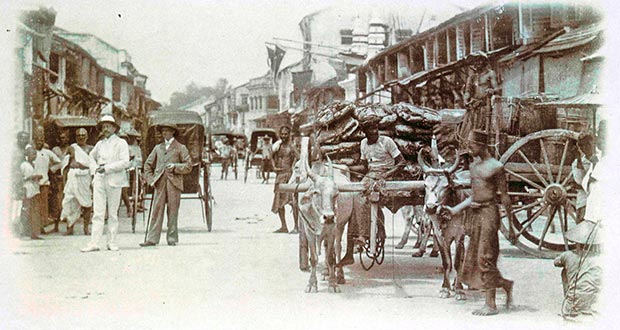
But how and why did the newspaper exist in a country where the Malay language isn’t widely spoken? Apparently, there’s quite a large Malay community residing in Sri Lanka, even until now.
The origins of Malay migration across the Bay of Bengal remain contested, but it most likely began during Dutch colonial rule in the eighteenth century. Early Malay settlers came from all over the Malay Archipelago, including Java, Sumatra, Makassar, Timor, the Bacan Islands, Ambon, Banda, Bali, and Madura. Some of them were political exiles with aristocratic backgrounds, while others were soldier that served under the Dutch military. The community’s strong bond developed over their shared Islamic faith, which also allowed them to strengthen ties with the Muslim Tamils on the island.
By the nineteenth century, ethnic Malays who served the British military travelled from the Malay Peninsula and gradually became part of the Sri Lankan Malay community. Several generations of Malays joining the Ceylon Rifle Regiment were maintained under British rule, which then strengthened their relationship with Malay literary culture. Classical Malay works from the Malay-Indonesian archipelago were copied, composed syairs addressed life in Ceylon, and then taught to their children through compulsory Jawi lessons. Even Baba Ounos Saidin himself was a member of the regiment.
It might seem like a random occurrence due to its location, but Alamat Langkapuri’s publication in 1869 was anything but random. Its publication was driven by transregional developments in technology and travel, especially due to the opening of the Suez Canal during the same year. The Suez Canal was crucial in facilitating commerce, communication and contact between Europe and the Malay world. Opening up the canal brought significant advantages, particularly by facilitating transit, commerce, and communication between Europe and the Malay world, but most importantly, it opened up the route to Mecca–the most sacred site among the global Muslim community, which led to Sri Lanka’s ports becoming an important docking point for Muslims in the Malay World and Indian Ocean.
Alamat Langkapuri’s transregional nature was prevalent even through its language use. Despite mainly being printed in Jawi, other languages would appear from time to time. Languages such as English were used from time to time in advertisements and addresses; some Tamil proverbs were cited, and some sections appeared in Tamil or Arabic by naturally shifting away from Malay. Some sections also appeared in Tamil or Arabic, shifting naturally from Malay without any clear indication. This could easily be overlooked, as Tamil, Malay, and Arabic were all written in the Jawi script.
The paper faced financial challenges, limited readership, and eventually closed in 1878. But Saidin merely ushered in the beginning of transregional influences on Malay print. Over the next few decades, ideas from Egypt and the Ottoman Empire would continue to inspire developments in Malay print and literature, from the reformist journal, Al-Imam, to the traditionalist periodical, Pengasoh.
Further Reading:
Ricci, Ronit. ‘The Malay World, Expanded: The World’s First Malay Newspaper, Colombo, 1869.’ Indonesia and the Malay World 41 (2013: 120): 168–82.
Molek, Khaldun. 2018. ‘Colonialism and the Dialectics of Islamic Reform in a Malay State: “Pengasoh” and the Making of a Muslim Public Sphere in Kelantan, 1915-1925.’ PhD thesis, University of Cambridge, 2018.