
Sharon Wah
When memorial is erasure:
The story of a radio operator, and the constricting legacy of the Malaysian war hero
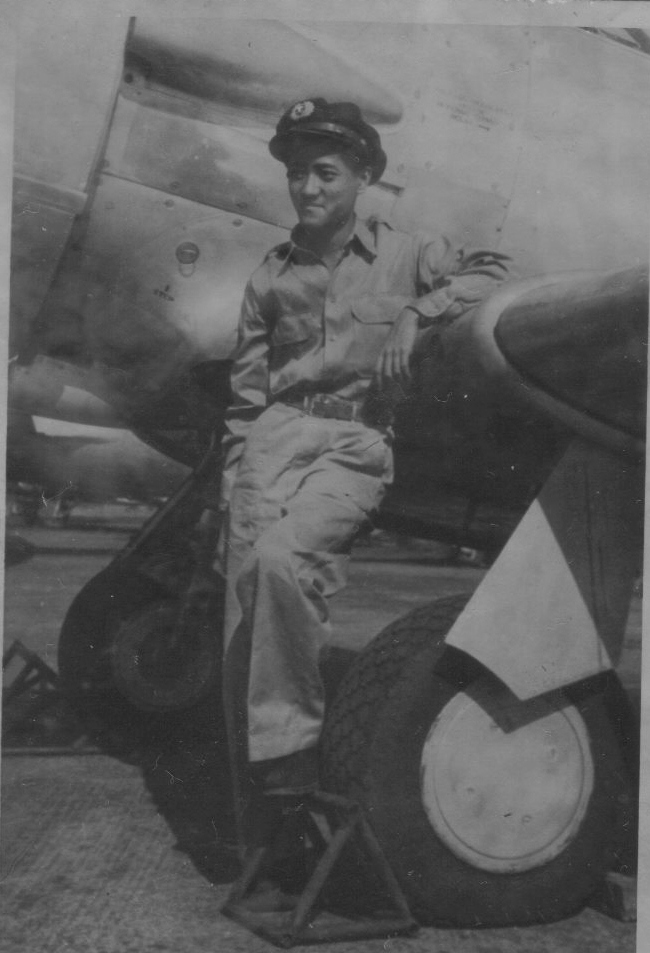
John Tow Shanton, CNAC.org
What does it mean to be remembered as a hero in national history?
Sejarah textbooks outline familiar names: Leftenan Adnan bin Saidi, “Lion of Malaya” Gurchan Singh, and Albert Kwok, amongst several others— figures enshrined in national memory for defending the country against colonialism, lauded for their bravery, strength, and loyalty to the nation. On the opposing end, members of the Chinese community contest against the official narratives of wartime memorial, advocating for their historical trauma and resistance efforts during wartime occupation to be given recognition, a bid consistently spurned by the authority figures within the Malay community. The terrain of wartime memorial is thus far from simple; the rendering of dominant narratives rests upon a constricting vocabulary of nationality, virtue, and race, prone to ongoing contestation.
Juxtaposed against this backdrop is the story of Tow Siang Yew: an ordinary man from Swatow (汕头) who migrated to Malaya as a toddler, and a father to a Chinese Malaysian family. As a mere teenager, he made an extraordinary trek from Hong Kong to Chungking (重庆) in a desperate bid to flee from the 1941 invasion of the Japanese, only to re-enter war in an unexpected twist of fate. For 7 years, Tow Siang Yew flew aboard China’s war planes, not as a pilot, but as a radio operator.
Caught within the grooves of wartime memorial, Tow’s motivations and choices complicate the state notion of a war hero: a story perhaps less about virtuous loyalty to a nation, and more akin to that of an ordinary Malayan shaped by circumstances of the moment, made up of economic conditions, one’s social networks, happenstance, and most profoundly— the mundane desire to survive.
Above all else, however, Tow’s story illuminates that the act of remembrance itself is never neutral— and that when admission into the terrain of wartime memorial entails the compression of one’s complex humanity into rigid boxes of national allegiance and race, perhaps the medallion of a legacy, so coveted, may itself serve as its own form of erasure.
____
The sound of air-raid sirens sliced across British Hong Kong on the morning of 8th December 1941. Hours later, Japanese troops crossed the Shenzhen river and struck north of the territory as bombs fell upon the city, heralding Japan’s 3-year occupation of Hong Kong within what would be the biggest war of the 20th century. Tow Siang Yew might have felt vibrations of the bombings reverberate through the walls. Hailing from Swatow, he is at the green age of 19 years old then, and a mere 6 months into being a medical student at Hong Kong University.
As a child, Tow Siang Yew’s first choice wasn’t to be a doctor, but an artist. His father was a revolutionary who served as a medical superintendent under the Chinese Nationalist Army of Generalissimo Chiang Kai Shek. When the Kuomintang fell during China’s great upheaval, he fled to Malaya— imagined to be “paradise”— and bought up a rubber estate in Johor. In 1929, the Great Depression hit Malaya’s markets, felling his hopes of becoming a rubber tycoon. By the time he asked his son, a lover of painting, on what he wished to be once he grew up, the man had laboured to set up a medical practice in Kluang against great hardship and dire straits. “The artist will not survive,” he avowed. Thus, in 1941, Siang Yew set off to the University of Hong Kong for his medical education— a stint fated to be short-lived.
The day of the Japanese invasion, a British professor from the University, Gordon King, had already left for Chungking three days prior. Not long after troops began ransacking the streets, his voice would travel through a radio speaker, calling for any students still remaining to join him, with a promise that they may continue their studies there. It was upon this radio announcement that around 30 Singaporean and Malayan students— Tow Siang Yew among them — would make the decision to follow in his footsteps (Chua, 1982).
Across the following weeks, the group split into smaller clusters, each leaving for Chungking. Eventually, with whatever belongings and little money they could gather, Tow and his friends dressed as ordinary villagers and fled to the coast. There, they secured a fishing boat in the dead of the night and sailed to North Vietnam: an intentionally indirect route to China, avoiding persecution in Japanese-occupied territory. Upon landfall, they begin walking— a trek of a hazy, grueling, unknowable duration. Perhaps it is more than a month; without a clock, any sense of time is difficult. At some point, however, their labour bears fruit: closing the straight-line distance of nearly 850 kilometers between their campus and Chungking, they reached the small town of China’s wartime capital.
Arrival was scarce relief— having sold all they had to survive, most who made the journey are nearly penniless upon arrival. In a squalid room furnished with only a single mattress and a mosquito net, Siang Yew and around nine others squeezed and made do. Hungry and with nothing to eat, they scavenged for food by scrounging around the village during the middle of the night. Relief later arrived via radio— a second foretelling of what lay in store— an official recruitment call for pilots and other vacant positions in the Allies’ war effort. Unable to withstand his conditions any longer, Tow took up the offer. With his first application to be a pilot rejected on the basis of his short sightedness, Tow undeterredly signed up to what his nephew, in retelling the story, called “the next best thing”: a radio operator.
To be a radio operator during World War II as a mere 19-year-old was far from a desk occupation. Flying to and fro between Chungking and Calcutta, his trajectory involved navigating a deadly terrain called the Hump, colloquially known as “The Aluminium Trail”, and in lengthier fashion: “the foremost and by far the most dangerous, difficult and historic achievement of the entire war”. An aerial view of the Hump justifies its title— silver shimmers scatter across the Hump, debris from fallen planes who failed to triumph the treacherous Himalayas and its high winds, subzero temperatures, thunderstorms, and peaks exceeding 18,000 feet. Flying over this silver path, radio operators are seated by their pilot, appointed to a task that makes all the difference between their life and death: Tuning into the radio, they seek to intercept signals from enemy Japanese planes, with which a trigger-happy encounter would swiftly lead to demise.
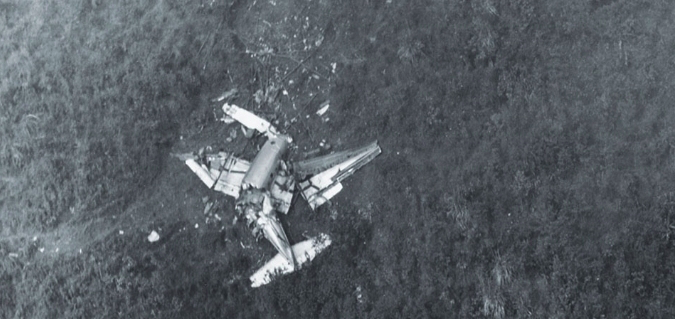
CBI-Theater.com
As a radio operator, Tow contributed to a larger purpose of China’s military aviation: carrying essential supplies for the Nationalist Government. These included ammunition, food, medical supplies, bombs, and gasoline, amounting to a total of 650,000 tons of military supplies delivered across the war (Deng and Zhang, 2018). Tow’s role fell under the purview of the China Aviation National Service, a Sino-American commercial outfit established by the Chinese government and Pan American Airways. During his service, Tow made up a larger personnel of approximately 175 radio operators, the majority of whom were of Chinese descent. He ended his term of employment in 1945, amounting his time as a radio operator to a total of seven years.
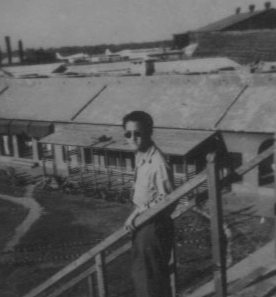
John Tow Shanton, CNAC.org
Tow Siang Yew at the base, with planes in the background
(Source: John Tow Shanton, CNAC.org)
Tow passed in 1992, at the venerable age of 69 years. After the war, he resumed his education at the Singapore King Edward VII College of Medicine, eventually starting a solo medical practice leading to his election as the president of the Penang Medical Practitioners’ Society in 1967. Today, the shoplot of what was once Dr Tow Siang Yew’s clinic is located at Dickens Street, Penang. Five months after his death, his close friend wrote of Tow in his obituary that he “was not afraid to die”— a greatest friend who “numbered among his hobbies fine arts, painting and collecting, and a great game of golf”.
As Tow’s wife and daughter retell his life to me, it is made clear that Tow’s world was much bigger than his time in Chungking— that for him, his wartime participation was merely one chapter, bridged to many others in his life: his practice as a doctor, his family, his 3 daughters and only son, his devout faith, and his hobbies of art and golfing. Such a story, however, is dissonant against narratives in wartime memorial, whose linear pathways are articulated along narrow corridors of nationality, virtue, and racial contestations of sacrifice.
Perhaps then what is most pressing within the consideration of Tow’s story, more than an enterprise of memorial, is the invitation for us to examine the impulse of memorial itself— What does being remembered as a hero really mean?
In Malaysia’s annual ceremony of Hari Pahlawan (Warrior’s Day), the Yang-di-Pertuan-Agong and the Prime Minister lay wreaths in remembrance of “all the heroes of the country for their services, deeds and sacrifices in ensuring security and defending the sovereignty of the country.” Sejarah textbooks commend resistance fighters for their nationalist spirit in protecting our tanah air against the Japanese colonizers. The Tugu Negara (“National Monument”) commemorates all who died in pursuit of Malaysia’s independence with seven bronze figures, each symbolising a quality: courage, sacrifice, leadership, strength, unity, suffering, and vigilance. The official decree is clarion: those who die in the name of a nation are those who are given a legacy, enshrined in a memory imbued with noble virtues of allegiance, patriotism, and altruistic courage— virtues often taken at its surface value, unquestioned, and absorbed into the wider national imagination.
Further still, where these virtuous legacies emerge is not neutral terrains of memory, but one that is racialised and contested. Since the mid-1990s, the trauma and role of anti-Japanese resistance amongst the Malaysian Chinese community have been long denied recognition in national history on the basis of anti-Communist sentiments, touted by the Malay community. In 2006, a commemorative activity by Chinese associations was criticised by a minister as “a memorial for communists” and enemies to the nation; the sentiment echoed across Malay press (Ting, 2021). Today, official narratives of wartime memorial remain Malay-dominated, shaped by Malay politicians, veterans, and religious authorities. Far from a blank slate, the terrain of memory harbouring the wartime hero’s legacy is uneven and unsettled, fraught with racial tensions, historical baggage, and the ardent desire of communities in the margins to be recognized for their sacrifices.
When the framework of wartime memorial is confined within such terms, to give someone a place in national memory means negotiating with their story to fit within them. And for Tow, whose participation in war was not driven by national allegiance, nor followed by desire for recognition on the basis of his Chinese identity, to memorialize him in wartime history would mean diminishing his story into terms that were never his own.
Tow Siang Yew’s story thus illuminates the erasure within the act of memorial— that submitting one’s story into national memory may also be to force it into submission, shoehorning the complex motivations of an individual into the gilded, narrow corridors of heroic virtue, or the battleground of communal memory. And so emerges the troubling question: In the pursuit of memorial, whose wills are contorted into virtuousness, or co-opted into racial terms?
By extension, Tow’s story prompts that the legacy of a national hero is worth questioning— that its virtuous, racial, nationality-bound story of patriotic altruism may be an insufficient receptacle for one’s humanity. Far from deviating from the norm, Tow’s story highlights the mundane humanness obscured by the luster of a state-benefacted glory: Perhaps, like Dr Tow, a hero was a student in pursuit of a future; perhaps a heroic act was a bid to survive. Or perhaps a hero merely responded to the shape of their circumstances, as minutely dictated by a confluence of arbitrary factors, social norms, and winds of fate within a moment too complex to grasp in a story. Perhaps the only difference between a hero and Tow Siang Yew was a border.
Underlying all of this is a cry for a history that can endure us: not one that is linear, curated, and determined by agendas of the state, but a history that can welcome and mirror our mundane humanness in its simple, unglorified desires, detouring narrations, and multilayered whole. More than just an account of a radio operator, Tow’s story serves as an impetus for moving beyond the statecraft’s narrow frameworks of what is worth remembering, pushing for an imagination of what an alternative way to belong may look like.
In doing so, one might find that perhaps the most profound resistance against the confinements of national remembrance is to reclaim the act of remembering for ourselves— to defy the neat, convenient categorization of our human wills by making meaning out of our lives on our own terms, making space for our ordinary desires, decisions, and open-ended endings, and to deem it all worthy of a place in history— which is to say, to see our unique aliveness as important for its larger meaning connecting us with others across time and space, no matter the decree of those in ivory towers.
If history is to endure us in our wholeness, perhaps the memory of Tow does not rest in the monument, but embers with him on the road, shapeshifting across the valleys, unsettling like silt under saltwater. There, in his detours— where remembrance is not static, but alive across time and space— may we all find belonging for our mundanity; may our own detours, in turn, find their place to belong, too.
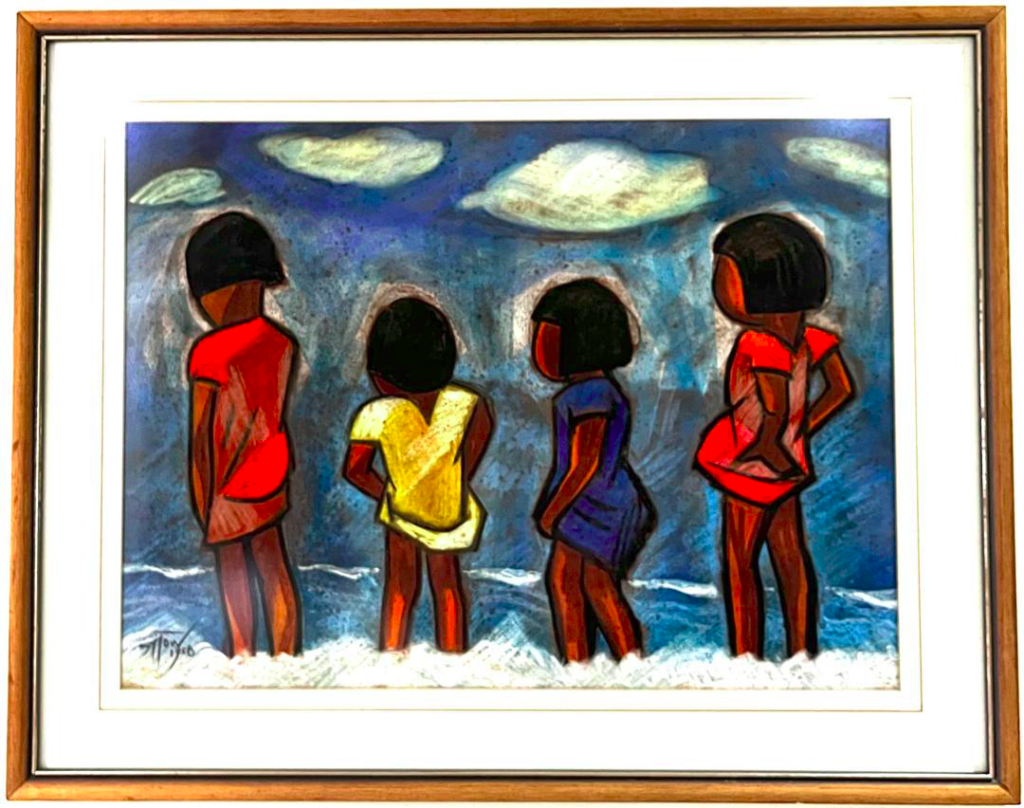
Jackie Tow, daughter of Tow Siang Yew, and without whom this essay would not have been possible
References:
Au-Yeung, A. (2015) ‘A hope for refuge turns to starvation and stealing: my grandparents’ life under Japanese rule in WW2 in Hong Kong,’ South China Morning Post, 15 August. https://www.scmp.com/news/hong-kong/article/1849579/starvation-and-stealing-life-my-hong-kong-grandparents-knew-under.
Chua, L.K. (1982) ‘’Chungking boys’ meet benefactor again after nearly 40 years’, The Straits Times, 8 March 1982, p. 13. Accessed at: https://eresources.nlb.gov.sg/newspapers/digitised/article/straitstimes19820308-1.2.59
Deng, L. and Zhang, Y. (2018) ‘Hump Pilot retells World War II stories,’ World – Chinadaily.com.cn, 9 March. https://www.chinadaily.com.cn/a/201803/10/WS5aa2b8daa3106e7dcc140bf6.html.
Letters, P. and Letters, P. (2017) ‘The Battle of Hong Kong through the eyes of people who survived it,’ South China Morning Post, 8 November. https://www.scmp.com/magazines/post-magazine/long-reads/article/2054842/battle-hong-kong-through-eyes-people-who-lived.
The Straits Budget. (1966). ‘Medical society picks officials.’ 9 February 1966, p. 7. Accessed at: https://eresources.nlb.gov.sg/newspapers/digitised/article/straitsbudget19660209-1.2.38
The Straits Times (2017) ‘Dozens evacuated after WWII bomb found near Hong Kong campus, 23 January. https://www.straitstimes.com/asia/east-asia/dozens-evacuated-after-wwii-bomb-found-near-hong-kong-campus.
Moore, T.O. (2000) ‘Welcome to the Official Home Page for the China National Aviation Corporation (CNAC)’, CNAC. Available at https://cnac.org/ (Accessed: 1 May 2026).
Moore, T.O. (2000) ‘CNAC Radio Operator Siang Yew Tow’, CNAC. Available at https://www.cnac.org/tow01.htm (Accessed: 1 February 2026).
Ting, H. (2021) ‘RECLAIMING NATIONAL BELONGING: THE POLITICS OF WORLD WAR TWO COMMEMORATION IN WEST MALAYSIA’. 馬來西亞華人研究學刊 (Journal of Malaysian Chinese Studies), (6), pp.29-57.
Tow, S.H. (2009) ‘Footprints in the Sands of Time’. Singapore: Reformation Banner Publishers.