
Loong Dien Min
In December 1950, a custody court battle over a young girl named Maria Hertogh was the cause of one of the most damaging riots in Singapore’s history. 18 people were killed, 173 injured, and over 20,000 Straits dollars in damage to vehicles and personal property. The riots left 18 people dead, 173 injured, and caused over 20,000 Straits dollars in damage to vehicles and personal property. Activists’ portrayals of the riot and competing newspaper coverage of Maria’s case have sensationalised its religious controversies; however, this focus has overshadowed a crucial aspect of the case and its main question: who had the power to decide whether a marriage was legal, and how parentage was defined under colonial rule?
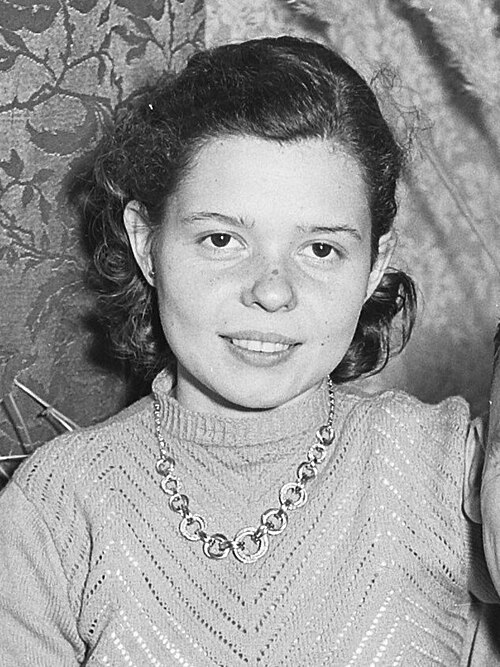
In 1937, Maria Hertogh was born to Dutch-Eurasian Catholic parents; however, during World War II, she was placed under the care of a Malay-Muslim woman, Che Aminah. After twelve years, in 1949, Maria’s birth parents in the Netherlands sought to reclaim her by contacting Dutch authorities.
Maria was found located in Terengganu, and the Dutch Consul-General immediately secured custody of her through Singapore’s High Court, which led to the court dispute between Che Aminah and her birth mother, Adeline Hertogh. It was noted that the mothers argued over guardianship, whether Che Aminah’s care of Maria was a permanent adoption or a temporary transfer. Although initially the judge ruled in favour of the Hertoghs, Aminah appealed with the help of the Muslim Women’s Association on account of procedural flaws. The appeal succeeded, and Maria’s return to Aminah in July 1950 was celebrated by many in the Malay-Muslim community.
Three days later, Maria, who was only 13 years old at the time, entered into a nikah gantung (truncated marriage) with a 21-year-old man, Mansoor Adabi from Kelantan. It was common among Malay-Muslims and legitimate under Islamic law, but pretty soon Maria’s biological parents challenged the marriage in the same court. By December, the marriage was ruled invalid by a judge under Dutch law, citing Maria’s young age and Catholic birth. Custody was then returned to her biological parents, who placed her in a Catholic convent preparing for her return to the Netherlands.
The court’s ruling was perceived as a rejection of Islamic faith for many Muslims at the time. For them, Maria was a Muslim girl in a valid Islamic marriage and not a Catholic-Dutch child, and tensions began to rise as newspaper outlets at the time began to sensationalise her ambiguous Muslim identity in the news. In December 1950, peaceful protests outside the Supreme Court turned violent after a fight broke out with a European officer. Rioters were targeting Europeans, Euroasians, and any Malays seen siding with the colonial rule, and it worsened as the military was called in. The riots died down by 13 December, but the damage was done, and deep divisions within society were laid bare.
The custody case received attention from people all around Malaya at the time; their attention was not only on Maria’s religious affiliation, but also on her status as a “child.” Everything about Maria’s position as a child in a marriage was questioned, including her alleged maturity, her intellect, and her legal capacity to marry. Public writers from Kedah, Johor, and Pahang had written to The Straits Times, questioning whether Maria’s consent to the nikah was truly given of her own free will, or whether the marriage was being used as a strategy to prevent her from being returned to her Dutch parents.
The case not only caused a ruckus in the local scene but also made international news; English, Dutch and American newspapers published the story, portraying Maria either as someone older than her actual age or as an innocent girl forced out of a pure and happy childhood. Due to this, Aminah’s legitimacy as Maria’s guardian was also questioned, especially as Maria’s welfare as a child came under scrutiny.
After the riots, both governmental and non-governmental groups immediately used the case for their own political purposes. As such, Singapore’s male-dominated Muslim Advisory Board used the case as an example to highlight the common occurrence of child marriages between Malay men and Chinese girls in the colony. With public debates becoming more intense, John Laycock of the Singapore Progressive Party proposed an Ordinance in September 1950 to nullify marriages involving persons under the age of 16, although he specified that the Bill would not apply to Muslim marriages.
The case and the Bill were then taken up by feminist activists, especially Muslim women, in their fight for better legal rights in marital affairs. Fighting alongside these feminist activists was Che Zahara, the President of the Malay Women’s Welfare Association (MWWA), who showed her full support for the Bill. However, the Muslim Advisory Board strongly opposed the Bill, arguing that only Muslims had the right to comment on the legalities surrounding Muslim marriages. The Bishops of the Anglican, Methodist and Catholic churches also opposed it, but on the basis of respecting the social customs of a multireligious population.
Maria’s marriage and custody case became a transnational public phenomenon, spanning from present-day Indonesia, Singapore, West Malaysia and the Netherlands, where people from these places became heavily invested in discussions surrounding personal laws and marriages. Dutch officials, from the press to the government, expressed their concern and pressured their British counterparts to act, which later led to the Dutch shaming British officials for their failure to prevent the situation from escalating. The riots also revealed the deep disconnect between colonial officials and religious sensitivities, especially around questions of marriage, custody and a young girl’s agency. In deciding who Maria really was, the colonial regime only showed how little it understood the communities it ruled.
This case shows that debates around child marriage in present-day Malaysia were never something new. The 1950 Hertogh controversy revealed the fragility of interethnic and interreligious relations, and the case itself was heavily shaped by Dutch and British imperial pressures, as well as the international attention it received during the time. At the centre of it all was Maria’s status as a child. Because of this, the ethical debates around child marriage today cannot be separated from the history of girls’ and women’s rights in marriage, especially in a society where marriage laws were long fragmented by religion, race, and anti-colonial anxieties.
Further Readings
- Syed Muhammad Khairudin Aljunied. Colonialism, Violence and Muslims in Southeast Asia: The Maria Hertogh Controversy and its Aftermath. London: Routledge, 2009.
- Tom Eames Hughes. Tangled Worlds: The Story of Maria Hertogh. Singapore: ISEAS–Yusof Ishak Institute, 1980.