
Allan Pang
The most recent SPM examination session ended in February 2025. For generations, secondary students across Malaysia have viewed SPM as a major milestone that marks the end of secondary school. Many of us may remember the pressure of preparing for it, still remember the long hours of studying, the pressure of revision, and the anxiety of waiting for results.But more than the memories, it is also worth asking: why go through all this, where did public examinations in Malaysia come from, and most importantly, were they always simply national?
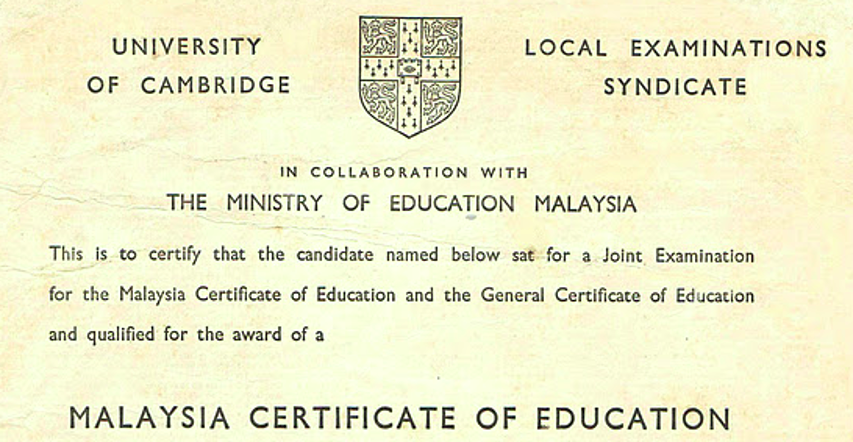
Before Malaya (now Malaysia) had its own national examination system, students, especially those in English-language schools, sat for the School Certificate Examinations administered by the University of Cambridge Local Examinations Syndicate (UCLES). As Malaya was under British rule at the time, students were offered examinations through the syndicate, which operated across different parts of the British Empire. The examination syllabuses reflected this imperial context. For example, students taking the syndicate’s history examination in 1930s Malaya were expected to study British imperialism as something “benevolent.”
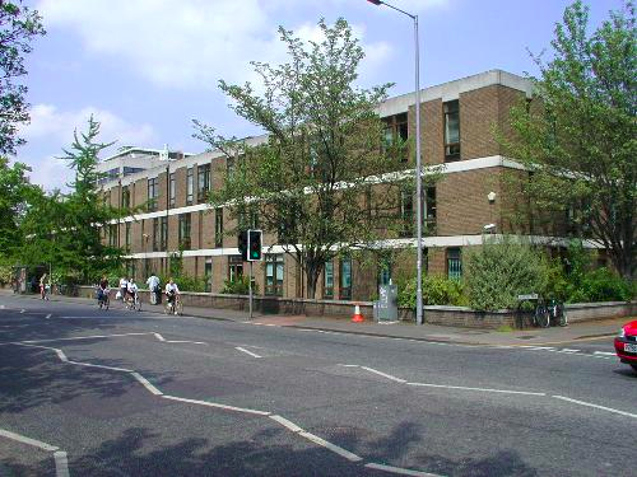
Cambridge 2000
The British officials were preparing for the end of colonial rule after the Second World War and Malaya’s education was one of the major concerns during this transition; one key issue was how to adapt the British education system into a more Malayanised education system. History became one of the crucial subjects in shaping the new education system. This is because History is a delicate subject; records can be emphasised, omitted, or retold in ways that shape how people understand the past. As new narratives of Malayan history emerged, the subject helped introduce the idea of Malaya as a nation to the wider population.
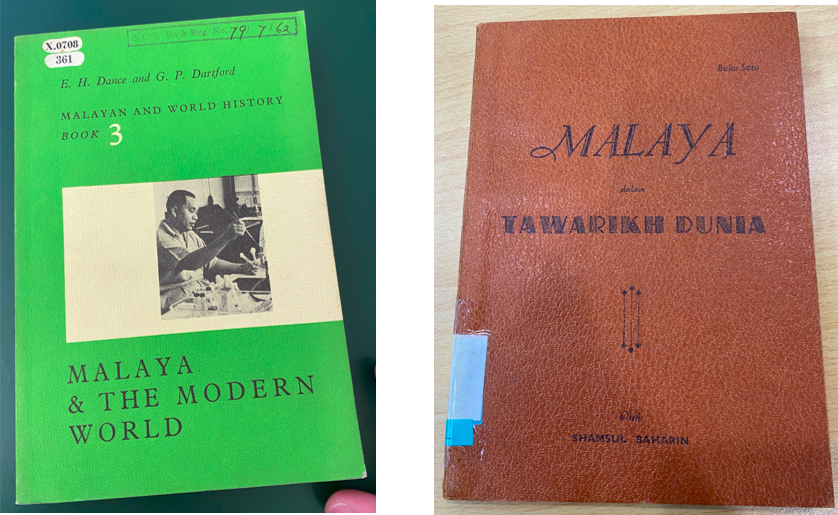
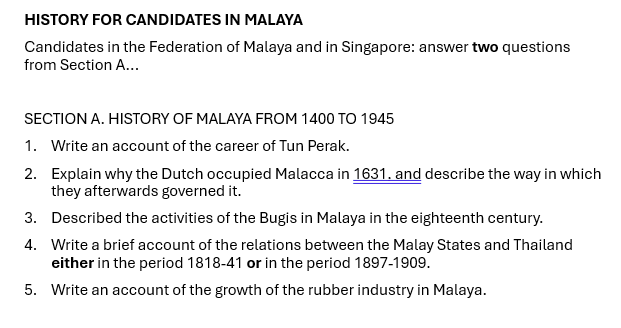
During the late 1950s and the early 1960s, Malaya and Singapore cooperated with the Cambridge syndicate to develop a new national history syllabus for the School Certificate Examination. Malayan history became a compulsory section for all students. You can find an extract of a History examination paper from 1962 on the next page.
Borhan Mohamed Dali
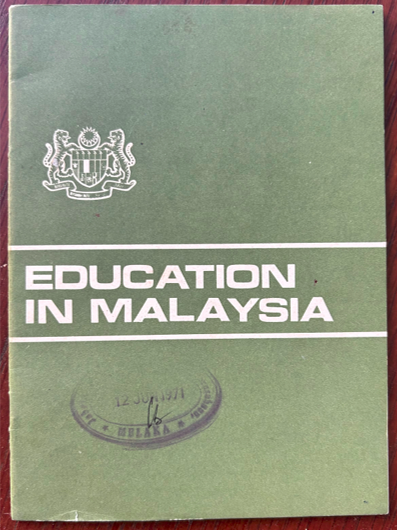
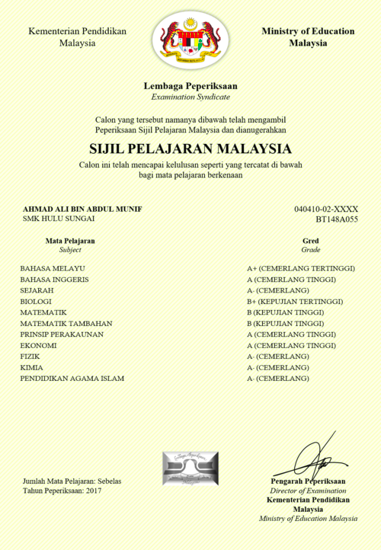
In the 1960s, as the Malaysian government began developing new public examinations for the education system in Malaya, Cambridge’s recognition was still important in giving these curricula credibility. However, by the 1970s, Malaysia started establishing Bahasa Melayu as the main language used within the education system and emphasising monolingual policies. By 1974, SPM would gradually replace the Cambridge School Certificate Examination; the Cambridge Syndicate was still utilised in assessing SPM question papers and answer syllabi.
With SPM replacing the Cambridge School Certificate Examination, it can be seen as a way of decolonising the education system and a political attempt to manage Malaysia’s multilingual reality. By now, public schools in Malaysia have stopped holding examinations under the name of the Cambridge syndicate and developed their own national examinations: SPM and STPM. Malaysia’s established curriculum can clearly be observed moving towards a more nationalist narrative; however, in the following decades, this sparked debates over the need to develop a more global and multicultural worldview.
Wikipedia
Further Readings
- Kevin Blackburn and ZongLun Wu, Decolonizing the History Curriculum in Malaysia and Singapore (Routledge, 2019), chapters 4-5.
- A. J. Stockwell, ‘Examinations and Empire: The Cambridge Certificate in the Colonies, 1857–1957’, in Making Imperial Mentalities: Socialisation and British Imperialism, ed. J. A. Mangan (Manchester University Press, 1990), 203-20.
- Sarah Stockwell, The British End of the British Empire (Cambridge University Press, 2018), chapters 1-3.