
Leong Yee Ting
TRIGGER WARNING
This post contains mentions and descriptions of rape, sexual harassment and murder.
A Moralistic, Left-wing Campaign
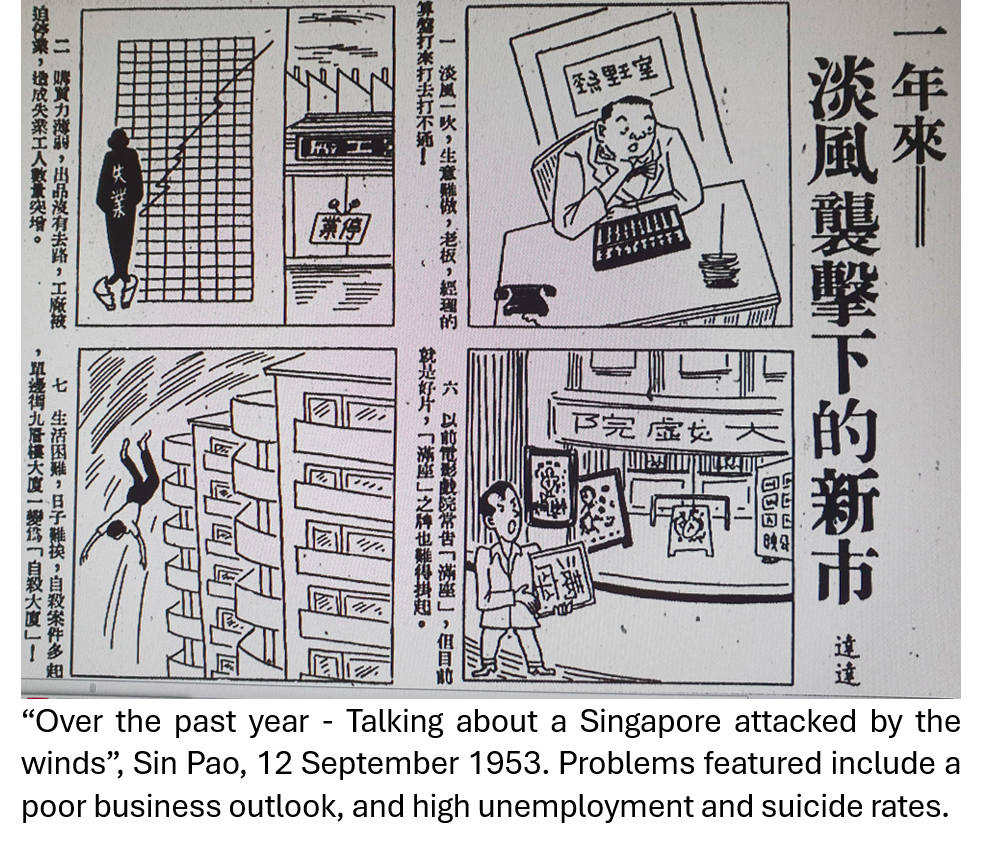
“Yellow culture” was an elastic, complex, and multivalent term from the Chinese-speaking world, especially within the Singaporean context in the 1950s, where the phrase took a more moralistic and political tone. The phrase first emerged as a moral critique of society alongside other societal problems plaguing Singapore during the time, including unemployment issues and staggering suicide rates.
Transnational Origins of the Concept “Yellow Culture”
The phrase “yellow culture” was coined from the term “yellow journalism,” which originally emerged in the United States during the 19th century and was used for sensationalised, lurid content to attract readers in the context of competitive newspaper publishing. While the term was initially used to describe American entertainment news, by the early 20th century, the term had started making appearances in the Chinese-language world, being used to describe all kinds of deliberately sensational and astounding news.
Starting from the 30s until the 40s, China started to use the term “yellow journalism” to depict moral decay, shallowness, and low-level interests, and over time, the term started being associated with obscene, pornographic and sexualised content. In Singapore during the 50s, “yellow culture” was commonly referred to as tabloid papers, romance novels, and striptease performances by the Chinese society, which had then become a capacious and fluid concept.
Rape-murder of 16-year-old schoolgirl Chong Geok Tin
On 12 October 1953, the rape and murder of a 16-year-old Chinese schoolgirl, Chong Geok Tin, had surprised Singapore due to the sexual and heinous aspect of the murder; her untimely and unjust death had caused public outrage among the Singaporeans during the time. Her body was found only within walking distance of the Pearl’s Hill Police Station and her own house. The Chinese Singapore society was angered by the lack of morality involved in the case, and despite the emotional outcry by the public, the murderer was unfortunately never apprehended.
Ultimately, the rampant normalisation of pornographic materials and entertainment, also known as “yellow culture,” among the masses was treated as the root of the tragedy that befell Chong Geok Tin. The Leftist movement in Singapore had taken the opportunity from the tragedy to raise awareness of the negative impacts of “yellow culture”, which was later known as the Anti-Yellow Culture Movement. In Chinese schools, students held speeches and debates in denouncing the damaging effects of “yellow culture.” The students gathered “yellow” novels, magazines, newspapers and burnt them in the school fields as a way to make a statement; through these events, it strengthened their solidarity and anti-colonial sentiments.
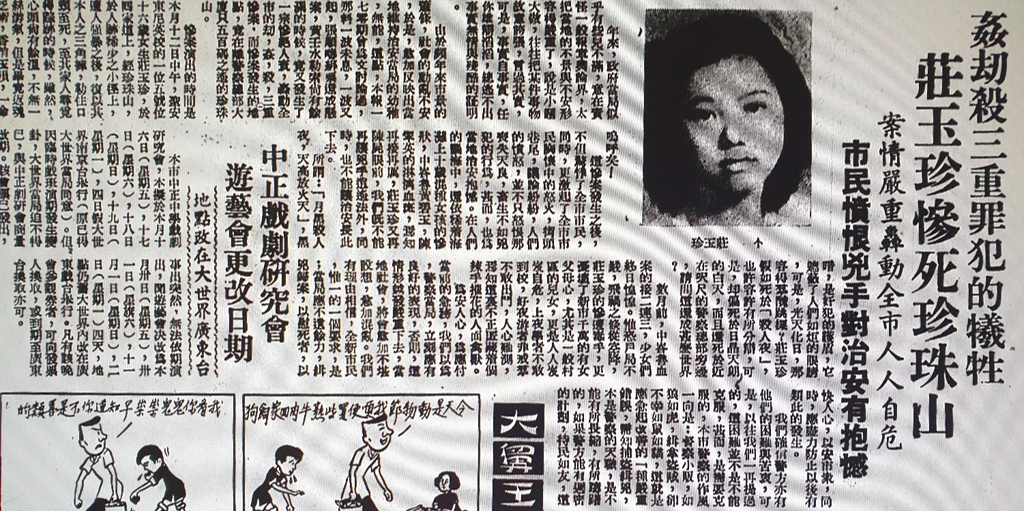
Sin Pao, October 15, 1953, 2.
Anti-colonial Anxieties
The campaign also carried a clear left-wing and anti-colonial political agenda. It criticised the colonial government for allowing “yellow culture” to spread among the masses, while at the same time strictly censoring left-wing literature. To the Left, this showed the moral weakness of the colonial government and proved that it was unfit to rule. They argued that foreign British influences were “attacking” and weakening the development of a healthy Malayan cultural identity.
The campaign also had a clear left-wing and anti-colonial political agenda. It set out to criticize the colonial government’s permissiveness towards “yellow culture” while pursuing strict censorship of left-wing literature.
The Left argued that the colonial government’s moral laxity made it unfit to rule. They claimed that foreign British influences were “attacking” and undermining the development of a healthy Malayan cultural identity.
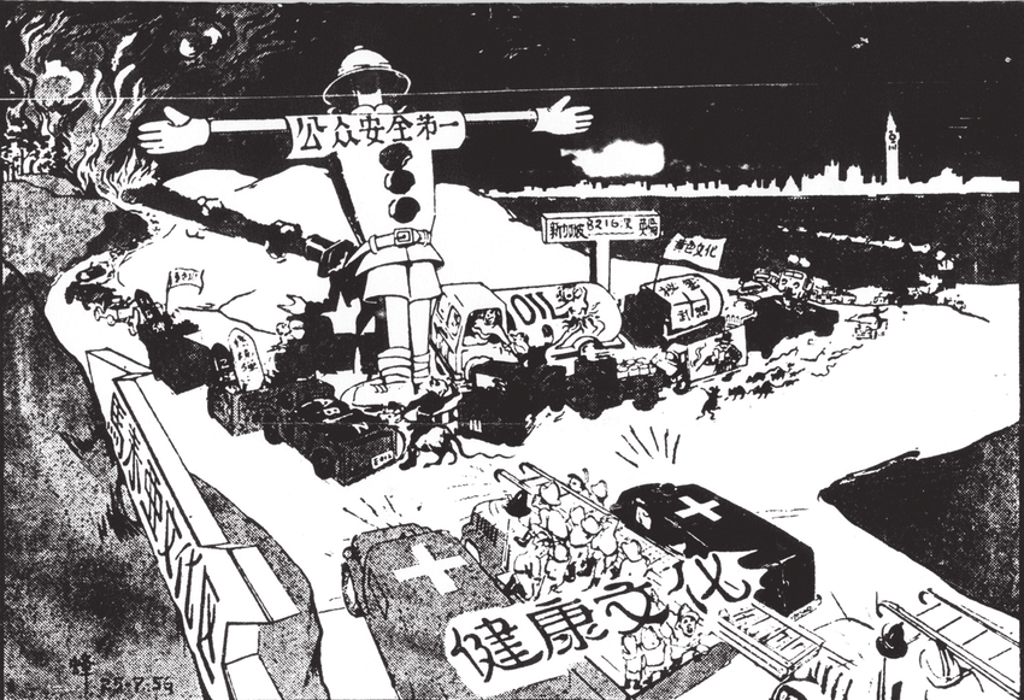
Shi Dai Bao, August 25, 1956, PRO 27 330/56 CONF, National Archives of Singapore.
In this anti-colonial depiction of the Anti-Yellow Movement, colonialism is represented as oil, vermin, and unsavory men and women infiltrating the “Malayan cultural zone” under the guise of “public safety.” In the foreground, “healthy culture” is represented by ambulances and fire engines. Yet, their advancement is hindered by the forces of colonialism.
Rise of a Feminist Consciousness
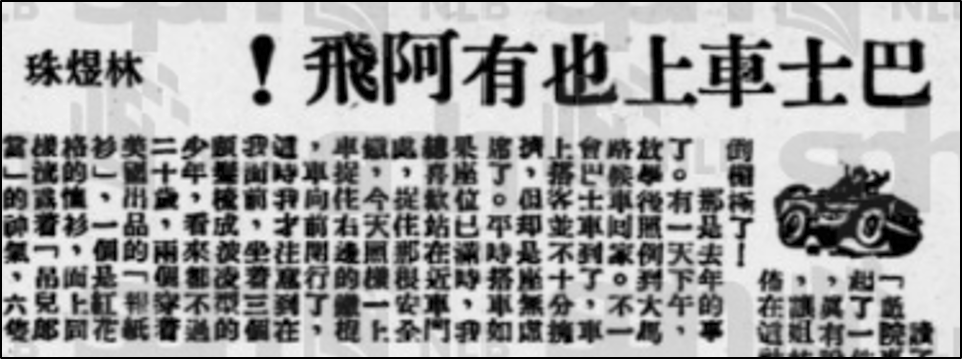
Politicized by Chong’s rape-murder, and the emergent Anti-Yellow Culture Movement, female students were increasingly writing into newspaper forums to complain of instances of sexual harassment.
Female students wrote indignantly about their experiences of molestation in the cinema and on the public bus, or cases of flashing or stalking near their schools.
Post-Colonial Disciplining of Society
The Anti-Yellow Culture Movement went on to shape and define nationalist politics.
When the most anti-colonial party of the time – the People’s Action Party – came into power, they moved to ban pornographic publications and films, striptease shows, jukebox dens, pin-table saloons, and rock ’n’ roll music.
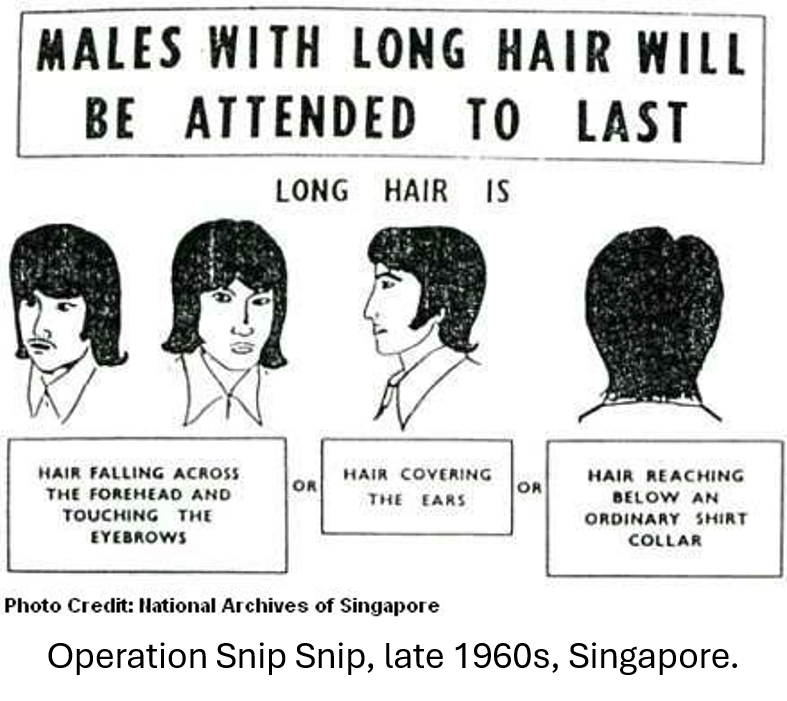
Even Western dress and fashion such as long hair on men, cowboy jeans, high heels, and revealing feminine clothes came under attack.
Further Readings
For more information on the rape-murder case of schoolgirl Chong Geok Tin, see Fleeting Feminisms:
Chinese-speaking Women Activists, The Left And Anti-colonialism In Singapore, 1950 to 1963. [Accessible by emailing the author via yeetingl@umich.edu]
- Lau, Yu Ching. ‘The Anti-Yellow Culture Movement, 1953-1961: Morality And The Language Of Decolonising Singapore’. M.A. Thesis, National University of Singapore, 2016.
- Lim, Cheng Tju. ‘The Anti-Yellow Culture Campaign in Singapore: 1953–1979’. In The State and the Arts in Singapore: Policies and Institutions, edited by Terence Chong, 31–48. Singapore: World Scientific, 2018.
About the Author

Leong Yee Ting is a PHD student in History at the University of Michigan – Ann Arbor. She is interested in questions of how gender and sexuality constructed race, class and regimes of power in colonial and post-colonial Singapore & Malaysia
Email: yeeting@umich.edu