
Allan Pang
‘The big hunt is on for the best cook in the territory. Man, woman or child.’

In 1971, from June until July, every newspaper publication in Malaysia and Singapore was actively on the search for the ‘best cook in the territory’ through their advertisements of ‘The Ideal Cook Contest’. Everyone living in the Northern half of Malaysia; Penang and Ipoh, up until the Southern and Central half; Kuala Lumpur and Malacca, including the people of Singapore, were invited to test their cooking skills, with the winner being awarded prizes that amount to SGD20,000. Beyond the competition itself, let’s dive into what gave this contest its historical significance.
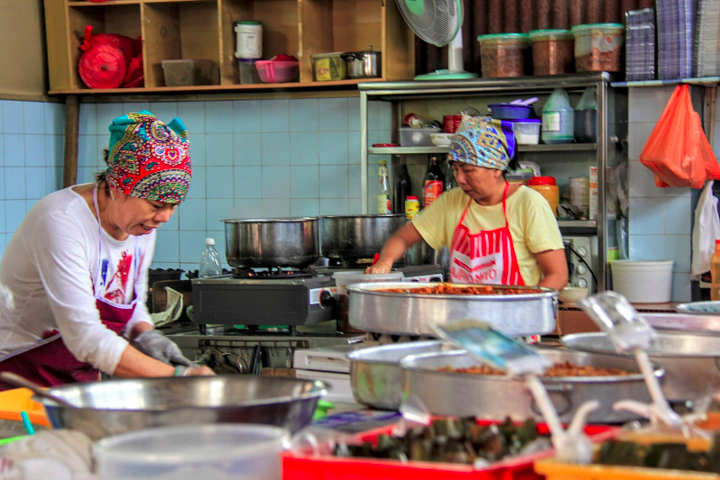
Source: Wikipedia (https://commons.wikimedia.org/wiki/File:Nyonya_kuih_kitchen.jpg)
It wasn’t merely a contest, but also a way to advertise products and various brands. Before winning the title of ‘best cook in territory’, one must be a customer first. Evidence of buying a product from involved brands (Ideal Milk by Nestle, Shellane, or New Zealand Lamb) was required to enter the contest, with the New Zealand Lamb Information Bureau having the most crucial role in the competition, which can be seen from the repeated mentions in advertisements and news reports.
‘In this contest, you can double your chances of winning by including a “Savoury” recipe that uses New Zealand Lamb, available from provision stores within refrigeration facilities.’
The Straits Times, 8 July 1971
This was where the New Zealand Lamb Information Bureau came in. It was not a local organisation, but a transnational agency that promoted lamb and lamb products from New Zealand. Throughout the 1970s, its presence could still be seen in English newspapers in Singapore, usually through advertisements, reports, or cooking-related features. One example appeared in The Straits Times on 8 July 1971, when Linda Quo, a Hong Kong-trained “home economist,” was featured during a cooking demonstration in Penang. The dishes she prepared were interesting on their own: a “Malay style lamb curry” and a “Western lamb cutlet.” Both dishes were different in style, but they shared the same main ingredient, New Zealand lamb.
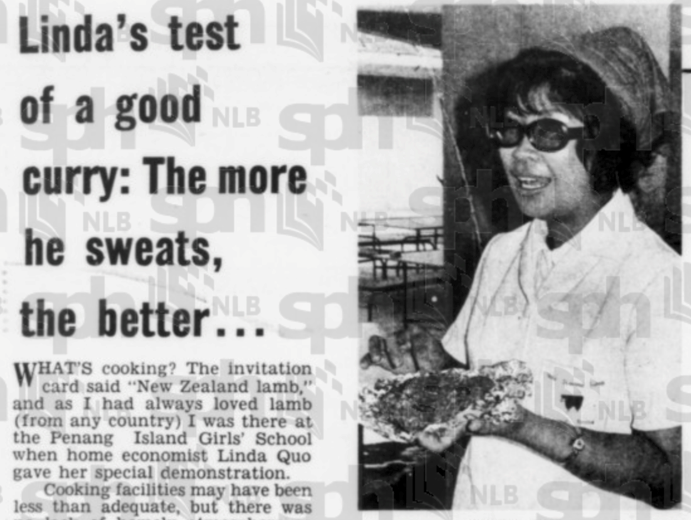
Source: NewspaperSG
Singapore’s case shows a slightly different story from Malaysia. Food supply there was closely tied to imports, and New Zealand meat had already found its place in the market. In a report by The Business Times on 3 September 1977, Singapore was said to have imported SGD13.7 million worth of beef and SGD3.5 million worth of lamb from New Zealand between July 1976 and June 1977. This showed that Singapore was not a small market for New Zealand meat, which explains why the New Zealand Meat Producers Board later appointed a merchandising officer to handle both the Singapore and Malaysian markets.
So, what happened at the end of the contest? Unfortunately, none of the available newspaper reports revealed who won. What The Straits Times did report, however, was on one semi-finalist whose story stood out, challenging the idea that cooking belonged only to women.
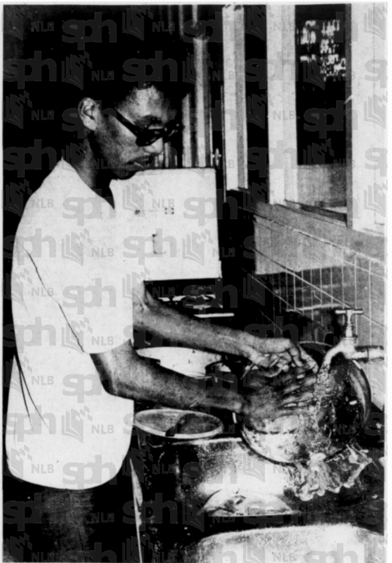
The Straits Times, 26 September 1971
During this time, cooking and kitchens were strongly associated with women; it was common to think women were the ones who belonged in the kitchen. Husbands who were only “galloping gourmets” were fast going out of fashion among Singapore women, so why not get ahead and outdo women at their own kitchen game? This was what 18-year-old Abdul Jalil bin Salleh believed in.
Jalil stated, ‘More men should take up cooking as a hobby. At least, they should learn to cook… and stop seeing the kitchen as something beneath their dignity.’ He noted how women have slowly crept into men’s “domain” by getting involved in male-dominated professions or hobbies, and it was time for men to shrink the so-called woman’s world. After all, the world’s renowned chefs are men. By the end of the contest, Jalil was the only noted male semi-finalist of the ‘Ideal Cook Contest’.
Still, Jalil’s statement towards the end carried a patriarchal tone, which was definitely not a desirable replacement for the gender stereotypes that already existed. He did not make it to the finals of the contest, where some of the final dishes included lamb biryani rice, potato basket, and tutti frutti pudding. The competition itself encouraged contestants to create recipes with “a local flavour.” In a way, this reflects what makes Malaysian cuisine stand out: the diversity of food across different communities, including Malay, Indian, Chinese, Peranakan, and many others. Despite the racial politics that continued to exist over the years, Malaysia has also developed a culinary image that highlights cultural diversity to the wider world.
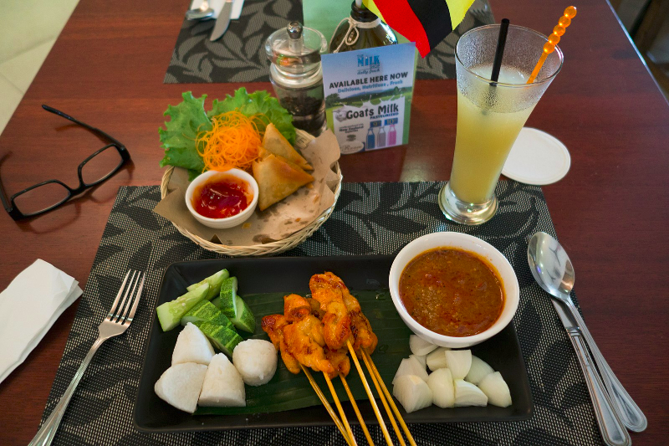
Wikipedia
Further Readings
- Gaik Cheng Khoo, ‘Defining “Modern Malaysian” Cuisine: Fusion or Ingredients?’ in Culinary Nationalism in Asia, ed. Michelle T. King (Bloomsbury, 2019), 111-29.
- Nicole Tarulevicz, Eating Her Curries and Kway: A Cultural History of Food in Singapore (University of Illinois Press, 2017), chapter 5.