
Research By Loong Dien Min
Source: KITLV
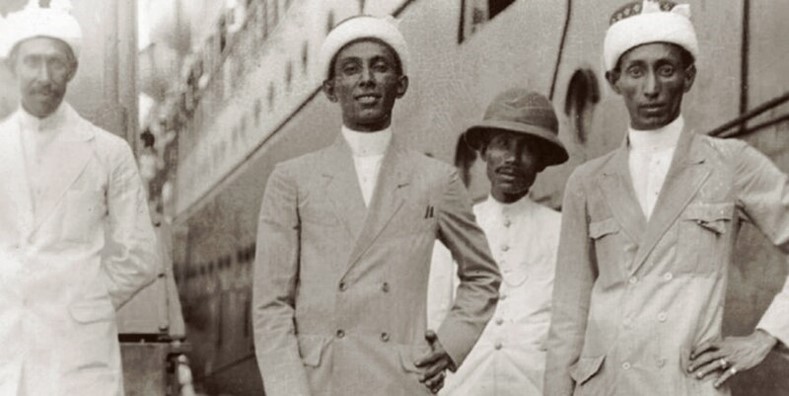
The Arab diaspora traversed oceans, engaged in trade, and accumulated large amounts of wealth. As their assets grew, they needed to ensure that their property was protected from disintegration, especially after their deaths. One of the ways to do this was establishing waqfs, which were endowments donated permanently, either for serving the public (waqf khayri) or for maintaining property within the family (waqf ahli).
Source: KITLV
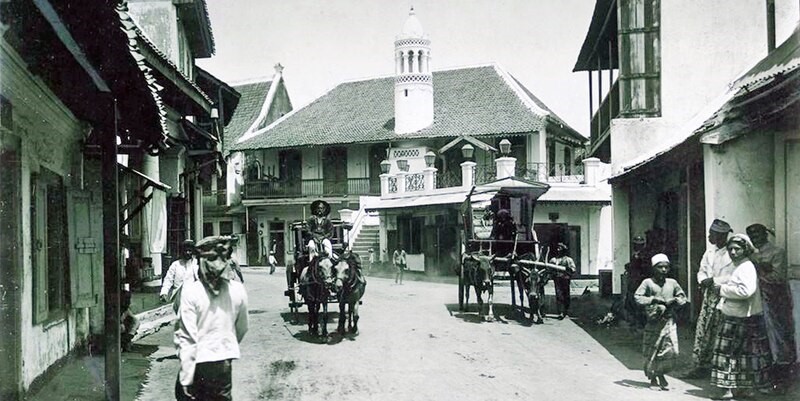
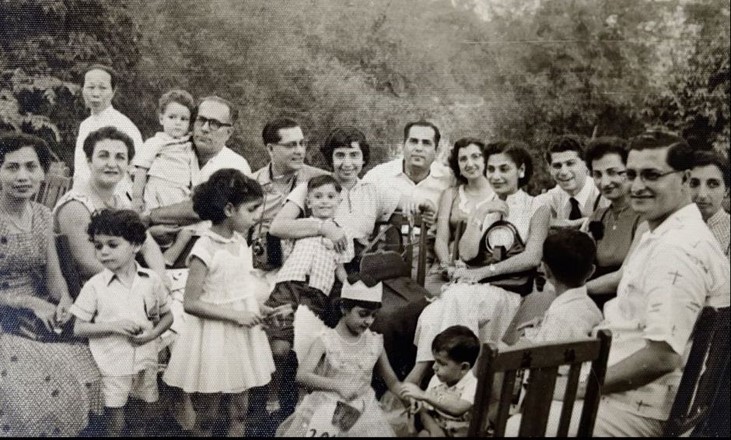
Arab and Indian Muslims dominated the landscape of waqf ownership in Penang, Malacca and Singapore, despite being less than 2% of the population from 1901 to 1942. They were not the only diasporas who owned property. Most property in the British Straits Settlements were owned by Jewish, Arabs and Chinese, rather than the British or the colonial government.
Source: The Jews of Singapore Museum.
Waqf deeds reflect the transregional lives of their founders. Many Arab Muslims who set up waqfs in the Straits Settlements actually lived in India or Hadramawt and remained there until their deaths. One of the most notable waqfs owned by Syed Shaik Alkaff, included properties in Surabaya, Batavia, Hadramawt (Tarim and Sayun), and the holy cities of Mecca and Medina. His waqfs alone were valued at 70,000 Straits dollars in 1923.

Source: The Alkaff Mansion, Singapore.
As a form of endowment, the waqf could not be taxed, nor could it be arbitrarily divided or given away. Coding property as waqf was a powerful way to shield the owner’s capital from potential disintegration and maintain it within its beneficiaries.
Although a waqf is generally labelled as property set aside for religious and philanthropic purposes, the Arab community had differing goals concerning waqfs, and did not hesitate to bring such disputes to court.

Source: MothershipSG
Arabs were expert litigants—they were highly proficient in navigating legal systems and were equipped with the skill to avail their rights in court. They engaged in forum shopping, and mobilized different forms of paperwork to exploit the colonial legal bureaucracy for their own ends

Source: Arkib Negara Malaysia, acquired by author.
Although waqf were protected by Islamic law, they were situated in British territory, which made them answerable to English common law. Common law judges had difficulty in ascertaining the status of a waqf, and often referred the waqf as a ‘trust’ in the English legal sense, divesting it of its religious meaning. Under the definition of an English trust, a waqf could only exist indefinitely if British judges found it to be charitable and beneficial to the public.

Source: Wikiwand
An obsession with charitability led to a narrow definition of public good, which was almost exclusively defined as uplifting poverty in the immediate present. This meant that the property had to prove its relevance to the poor, even if it was a family waqf. British judges did not grasp Islamic ideas of charity. In Islam, charity goes beyond just giving to the poor—it includes any act of kindness that benefits humanity.

Source: The Straits Times
Al-Shafi‘i, founder of the Shafi‘i School of Law, even saw helping those closest to you as the best way to support the poor. Arab conceptions of family extended beyond blood relatives to include spouses, servants, and even slaves. In this sense, setting up a waqf that benefits a servant could already be considered as an act of charity.
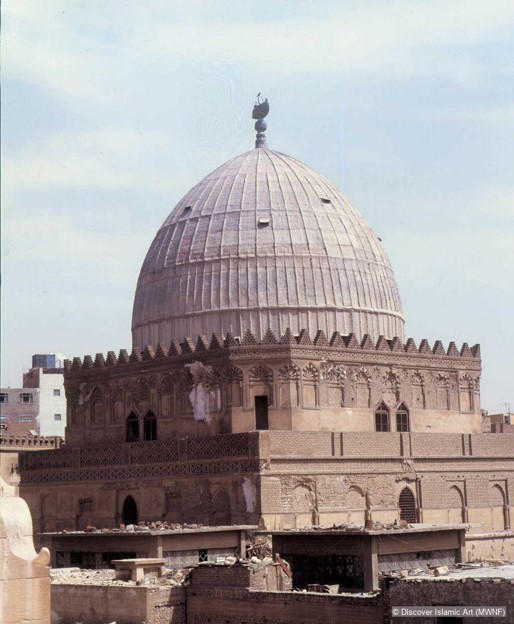
Furthermore, British judges overlooked the fact that family waqfs were established not to benefit the patriarch’s direct descendants, but members of the family beyond that, including adopted children and distant relatives.
Source: Museum with No Frontiers
Some descendants of these waqfs did not share the same charitable vision as their founders. They exploited the colonial legal system that was hostile to waqfs, to push for their dissolution. Historian Nurfadzilah Yahaya notes that Arab litigants relied on British judges to rule against Islamic law, as waqf cases involved real estate, which fell outside the usual Islamic legal scope of marriage, divorce, and inheritance. This allowed them to profit from property sales. This happened with the waqfs of Syed Ahmed Alsagoff and Syed Shaik Alkaff, which lasted 43 and 13 years before their descendants contested them in court.
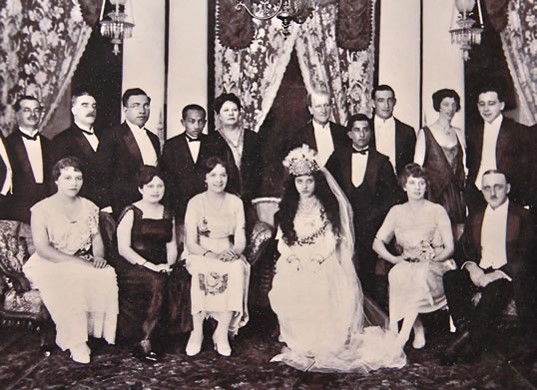
Source: ARAMCO World, July/August 2014 Issue.
Waqfs exist today across the Malay World and Indian Ocean as testimony to the transregional histories of its founders. But it would be a mistake to romanticize such mobilities without also understanding their complex past, one built upon intentions that were much less inclusive than often they seem.

Source: Badan Wakaf Indonesia
Further Readings
- Nurfadzilah Yahaya. “Compromises: The Limitations of Diasporic Religious Trusts”, in Fluid Jurisdictions: Colonial Law and Arabs in Southeast Asia. Ithaca: Cornell University Press, 2020: 157-177.
- Latifah Abdul Latiff. Penelitian Awal Terhadap Penglibatan Orang Arab dalam Kerja Amal di Malaysia Sebelum dan Selepas Perang Dunia Kedua [A Preliminary Study on the Involvement of Arabs in Charity Work in Malaysia Before and After World War Two]. Sains Insani 7(1), 2022: 17–27.
- Sharifah Zaleha binte Syed Hassan. History and the Indigenization of the Arabs in Kedah, Malaysia. Asian Journal of Social Science 32(3), 2004: 401-424.
- Sumit Mandal. “Categorisation and Control”, in Becoming Arab: Creole Histories and Modern Identity in the Malay World. Cambridge: Cambridge University Press, 2018: 75-108.
- Ho Eng Seng. “Creole Kinship: Genealogy as a Gift”, in The Graves of Tarim: Genealogy and Mobility across the Indian Ocean. Berkeley: University of California Press, 2006: 152-187.