
Research By Loong Dien Min

Source: MUBI.
From the 1870s, the Malay Archipelago saw a surge of interest in Urdu works, which were adapted into Malay literature. These works were reproduced through lithography multiple times and distributed via a network of trading agents and booksellers located throughout the Straits of Malacca, including Penang, Singapore, Johor, Aceh, Deli, Langkat, Palembang, Padang-Pariman, and Batavia.
Among them were Hikayat Sultan Bustamam, Hikayat Ganja Mara and Hikayat Gul Bakawali
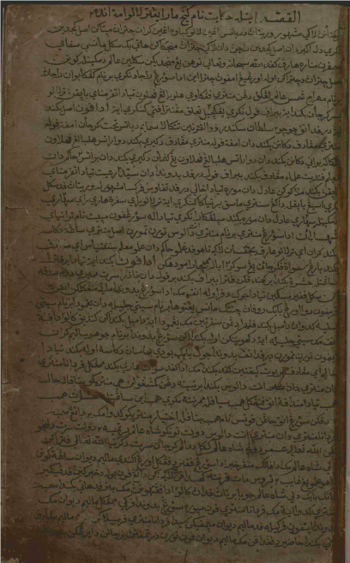
Source: Edzan N.N.
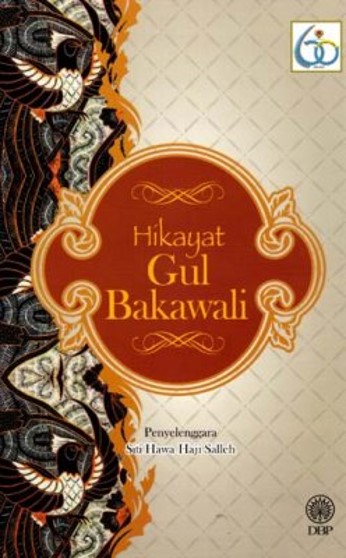
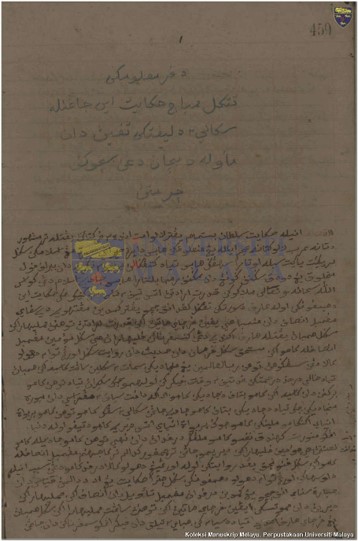
Source: MyManuskrip, University of Malaya Library
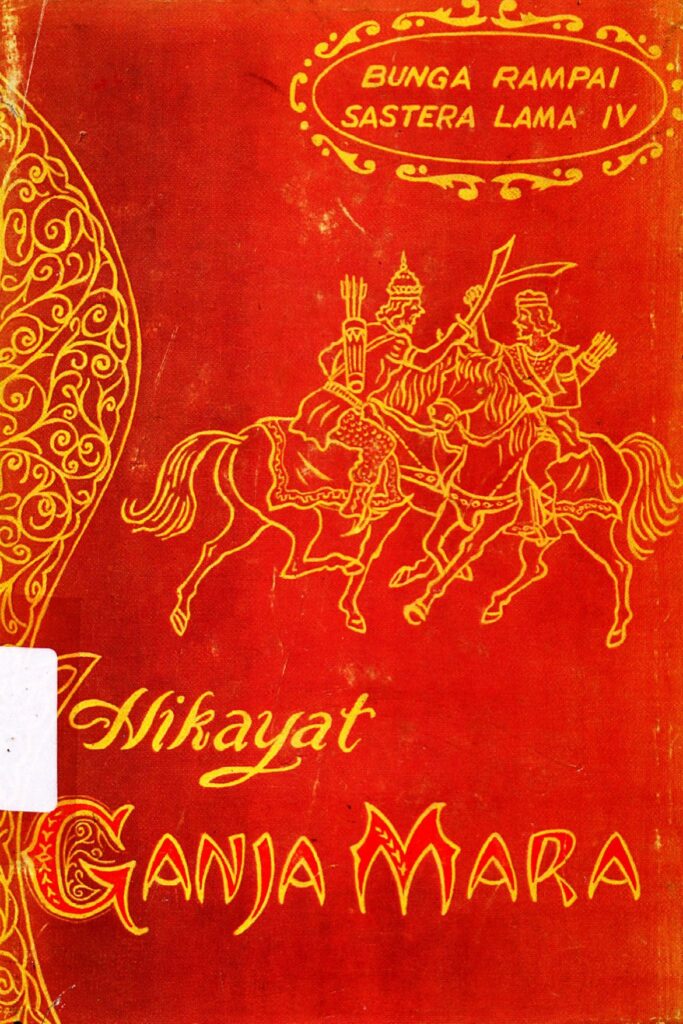
The introduction of the lithographic press likely boosted translation projects, but it was not the main factor behind the growing interest in Urdu works. Instead, the rise of Parsi theatre played a pivotal role, as touring Parsi theatre companies gained widespread popularity across the region. These companies were owned and funded by the Gujarati-speaking Parsi community, who had received Western education and culture. This popular entertainment thus drew its plots from Urdu classics, Islamic romance, stage devices from Northern Indian folk drama, stage setting from Victorian theatre and music and songs from Europe.
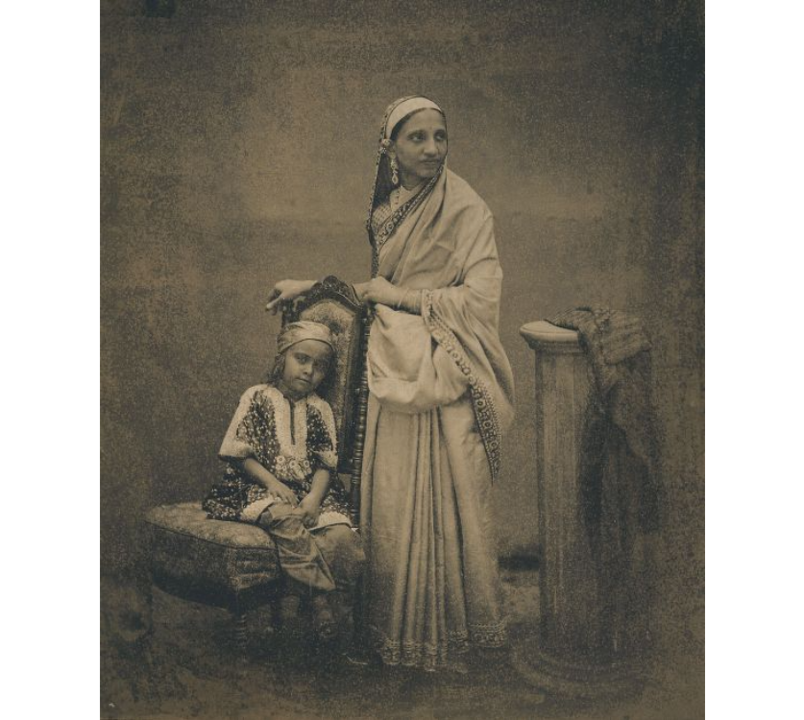
in Bombay, pre-1860.
Source: KITLV
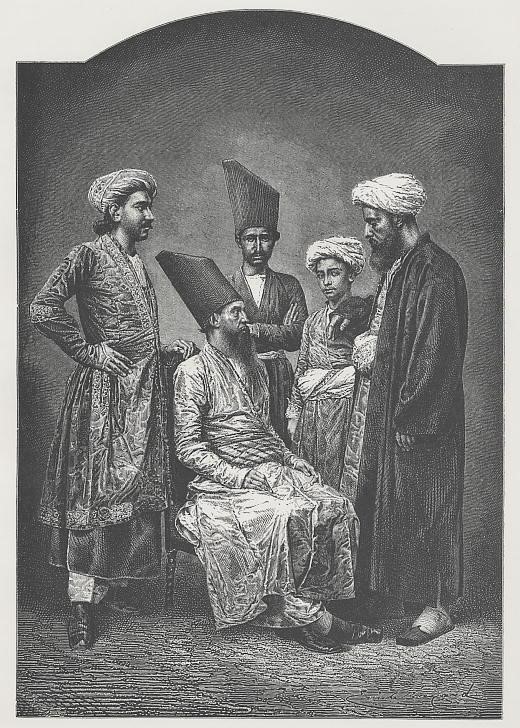
Source: Wikimedia Commons
By 1880, Parsi theatre had become so popular that audiences began demanding written versions of their favorite plays. However, these were only available in Gujarati script. Publishers competed fiercely to obtain the plays, which were closely guarded by theatre companies. They resorted to bribing actors, secretly transcribing performances, making minor changes, and rebranding the works under different authors.
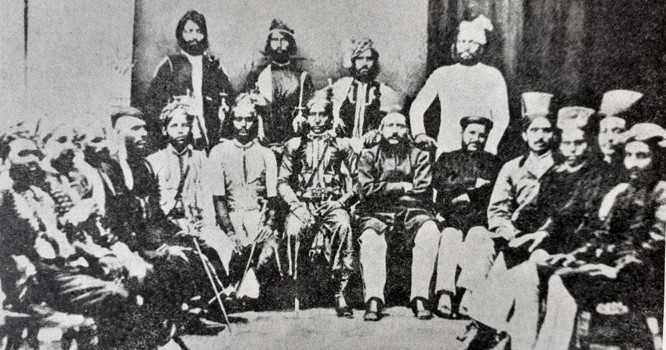
Source: Murali Ranganathan
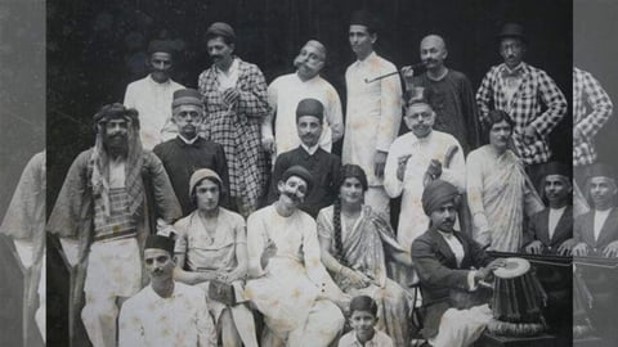
Source: The New Indian Express
Parsi plays reached the Malay world through the Jawi Peranakan community, a small but influential group of Indian-Malay Muslims primarily based in the Straits Settlements. This culturally mixed community was among the first to watch the touring Parsi theatres in the region. Proficient in Hindi, they facilitated the Malay translations of these plays.
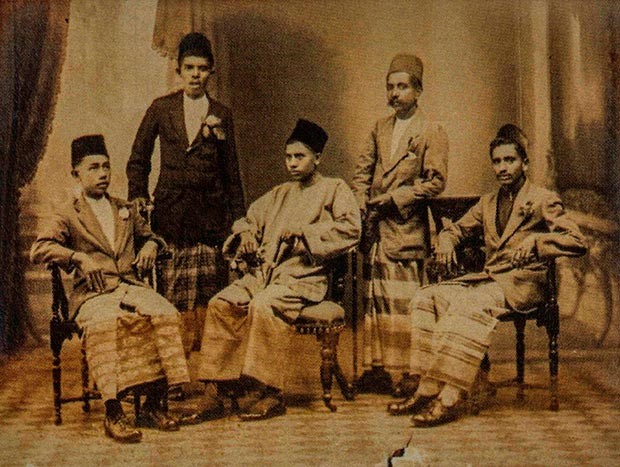
Source: Penang State Museum, via http://islamicartsmagazine.com/magazine/view/the_chulia_in_penang/
The Parsi Theatre Company’s success in Penang attracted a growing Malay audience. To meet this demand, Mamat Masyhur, a Penang-based Arab, founded an amateur company that mimicked Parsi theatre but performed in Malay. Around 1885, a wealthy Penangite, Mamak Pusyi, purchased Mamat’s equipment and established the first professional Malay-speaking “tiruan Wayang Parsi”. This company toured extensively under various names, including “Indra Bangsawan”, which eventually inspired “Wayang Bangsawan”—the urban popular theatre by a multiethnic audience.
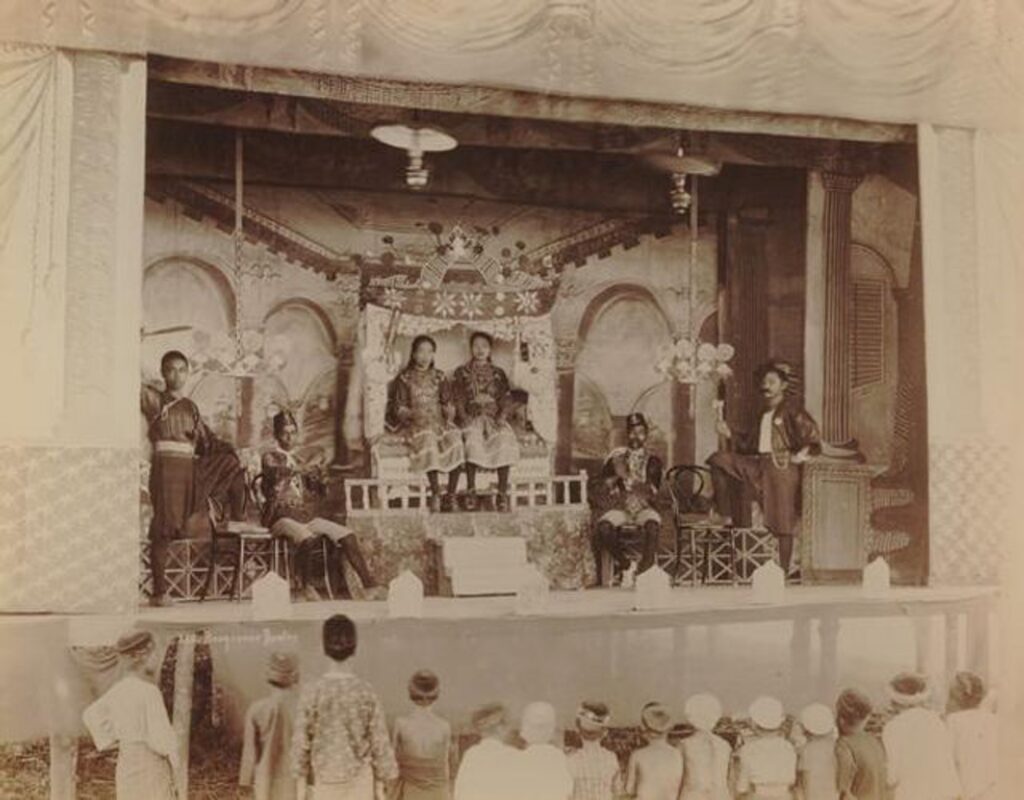
Source: KITLV
Parsi theatre also stimulated the emergence of Malay theatrical forms based on Malay classics such as the hikayat and syair. This was the case in Pontianak, Riau, Palembang, and Minangkabau. Indirectly then, Parsi theatre not only popularised, but also democratised traditional Malay works, bringing them to the everyday Malay audience outside the royal court. With the help of lending libraries and lithographic presses, Parsi theatre stimulated a final blossoming of Malay traditional literature before its demise in the early 20th century.
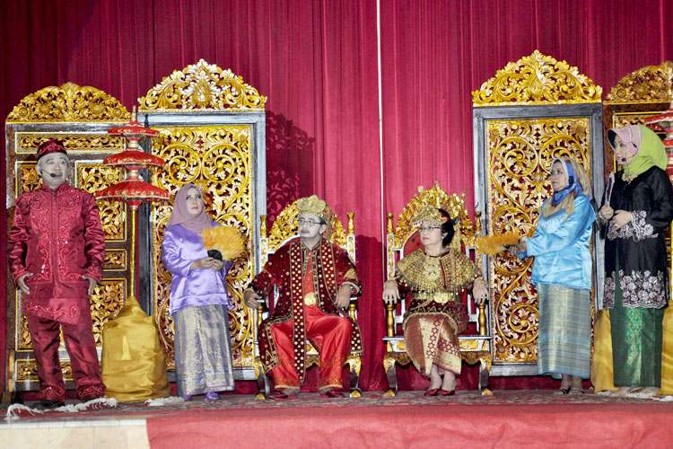
Parsi theatre inspired the reproduction of the syair in its theatrical form.
Source: Haluan Sumatera.
Like in India, the popularity of Parsi dramas among a Malay audience led to the translation, adaptation and publication of Urdu classics. Translations from Urdu were popular in the beginning to grant interested Malay audience a more comprehensive idea of the plot, delivered in a foreign language. Later, this demand continued because people wanted to re-read their favourite plays. Therefore, these ‘foreign’ classics not only became a part of traditional Malay literature, and also stimulated the emergence of Malay theatrical forms based on Malay classics.
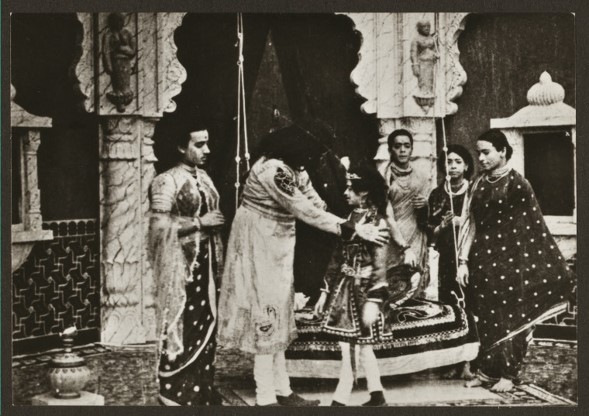
Source: The New York Public Library.
References
- Vladimir Braginsky & Anna Suvorova. A New Wave of Indian Inspiration: Translations from Urdu in Malay Traditional Literature and Theatre, Indonesia and the Malay World, 2008, Vol. 36, No. 104, 115-153.